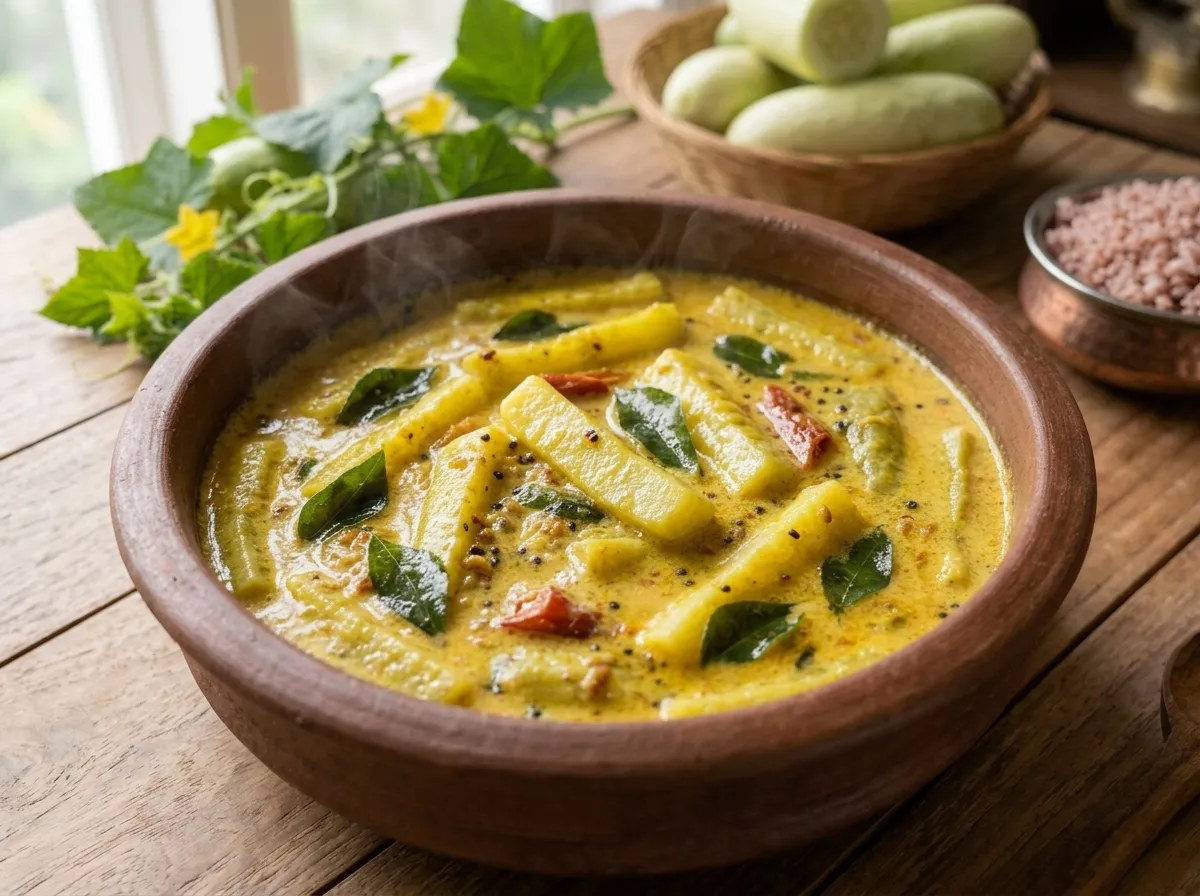
Sri Lankan Cucumber Curry (Pipignna Kiri Hodi)
Sri Lankan Cucumber Curry, traditionally known as Pipignna Kiri Hodi, is a comforting vegetable curry made with tender field cucumber, creamy coconut milk, fragrant curry leaves, and gentle Sri Lankan spices. The cucumber absorbs the aromatic coconut gravy while retaining a soft, juicy texture, making this dish a delicious addition to a traditional rice and curry meal.
This easy Sri Lankan cucumber curry combines thin and thick coconut milk to create a smooth, flavorful gravy. It is a wonderful choice for anyone looking for a simple vegetarian curry that can be prepared in about 25 minutes. Serve it with steamed rice, dhal curry, sambol, or your favorite Sri Lankan side dishes for a satisfying homemade meal.
What Is Sri Lankan Cucumber Curry?
Sri Lankan cucumber curry is a traditional coconut milk curry prepared with local field cucumber, often called pipignna in Sri Lanka. Unlike cucumber salads, this dish gently cooks the vegetable with aromatic spices until tender and coats it in a rich coconut gravy.
The curry is typically mild and creamy, with flavors from turmeric, mustard seeds, fenugreek, garlic, shallots, cinnamon, and curry leaves. Fresh chilies can be added for extra heat, while coconut milk gives the dish its characteristic richness.
One of the secrets to a good cucumber curry is adding the thick coconut milk toward the end of cooking. This helps create a creamy gravy without unnecessarily overcooking the cucumber.
Why You Will Love This Recipe
- Simple ingredients: The recipe uses cucumber, coconut milk, and familiar Sri Lankan spices.
- Ready in about 25 minutes: It is a practical choice for a quick homemade curry.
- Creamy coconut gravy: Two stages of coconut milk create a flavorful, smooth sauce.
- Easy to customize: Adjust the chilies and seasonings to suit your taste.
- Versatile side dish: Enjoy it with rice, dhal, vegetable curries, or other Sri Lankan meals.
Ingredients for Sri Lankan Cucumber Curry
The following quantities are estimated for four servings. Adjust the seasoning and liquid as needed depending on the size and water content of your cucumber.
Main Ingredients
- 1 large field cucumber, approximately 700 g (1.5 lb), peeled and deseeded
- 1½ cups (360 ml) thin coconut milk
- 1 cup (240 ml) thick coconut milk
- 8–10 small shallots, peeled and thinly sliced
- 3–4 garlic cloves, lightly crushed
- 4–5 fresh red chilies, sliced, or fewer to taste
- 1–2 sprigs fresh curry leaves
Spices and Seasonings
- ½ teaspoon black mustard seeds
- ½ teaspoon fenugreek seeds
- ½ teaspoon ground turmeric
- 1 teaspoon Sri Lankan unroasted curry powder
- 2 small cinnamon pieces, approximately 1 inch each
- ½ teaspoon ground black pepper
- Approximately 1 teaspoon salt, or to taste
Make Shopping Easier
Add this recipe's ingredients to your shopping list and keep everything organized.
How to Make Sri Lankan Cucumber Curry
Step 1: Prepare the Cucumber
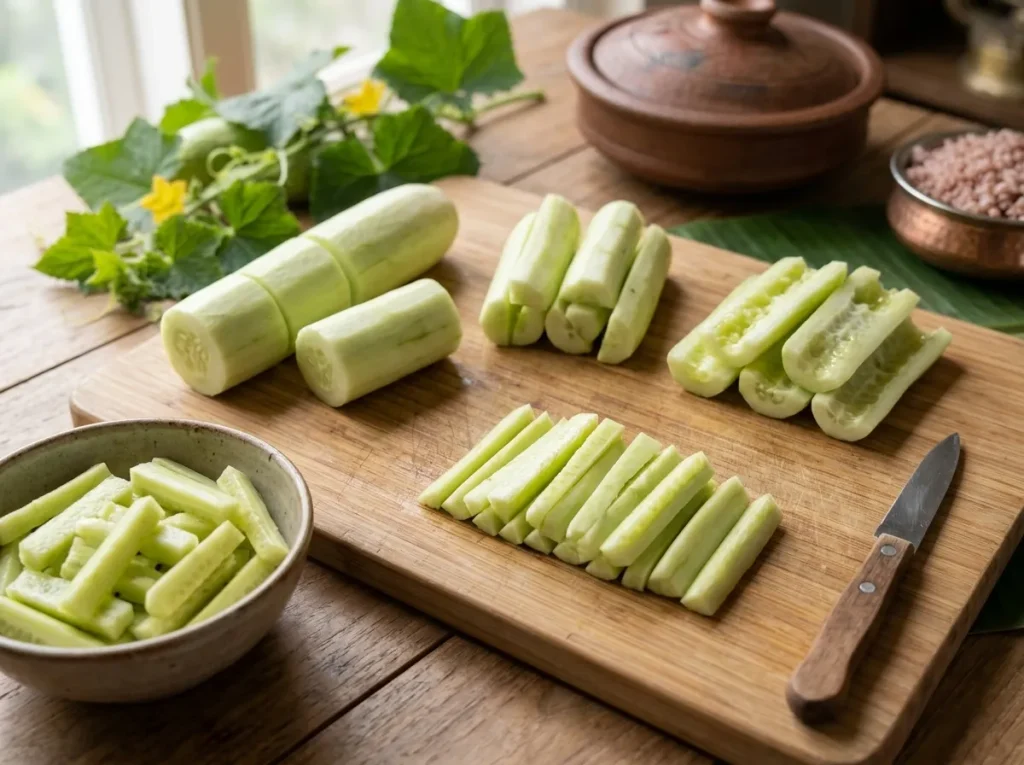
Wash the field cucumber thoroughly and peel away the outer skin. Cut it into thick sections, then split each section lengthwise.
Remove the watery seed core with a spoon or knife. Cut the remaining cucumber flesh into evenly sized batons so the pieces cook at a similar rate.
If you are using a variety with tender skin and small seeds, adjust the preparation according to its texture.
Step 2: Prepare the Aromatics
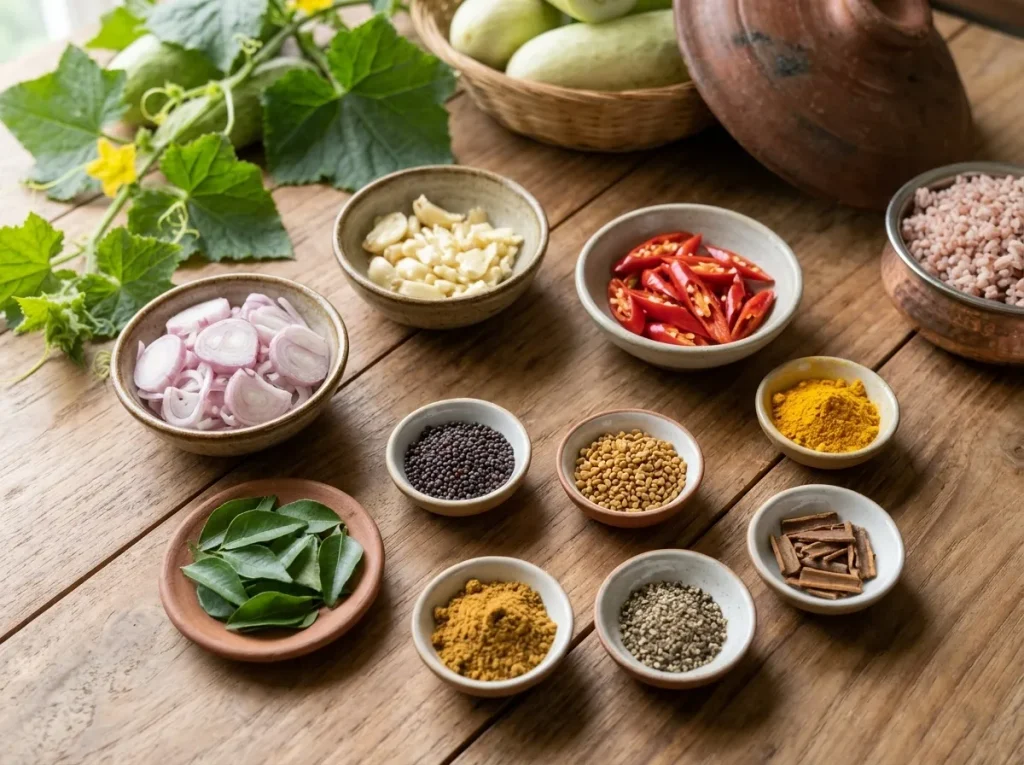
Peel and thinly slice the shallots. Lightly crush the garlic cloves to release their aroma.
Slice the fresh red chilies diagonally. Rinse the curry leaves and set them aside for cooking and finishing the curry.
Step 3: Combine the Ingredients
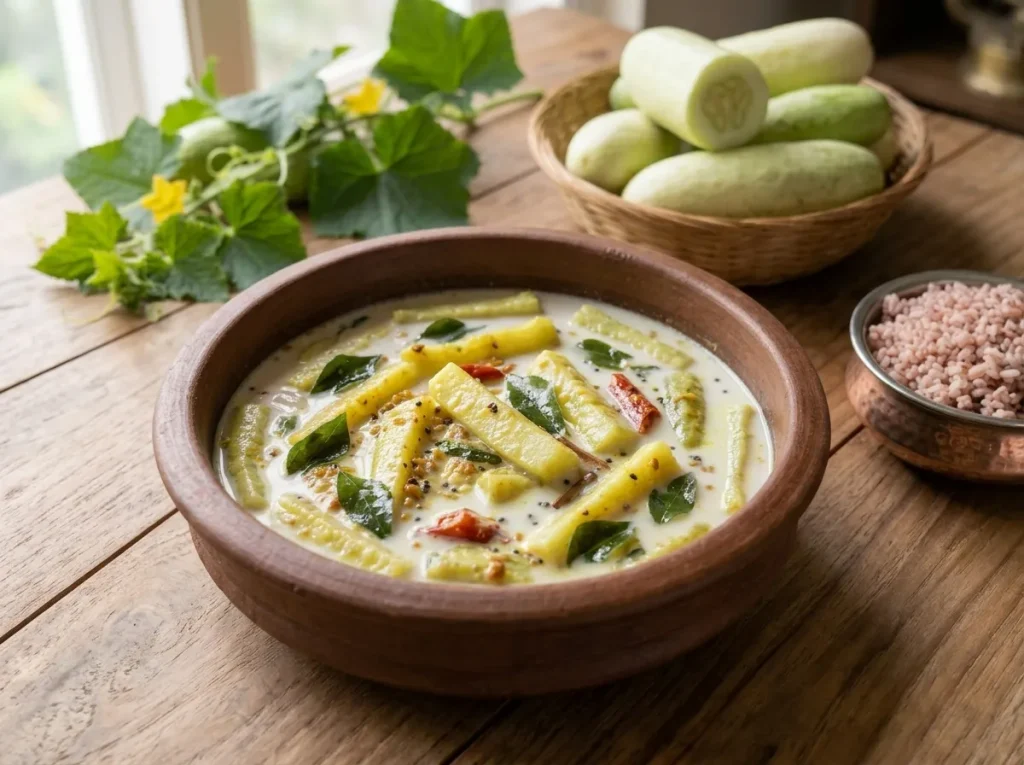
Place the cucumber batons in a medium saucepan or traditional clay cooking pot.
Add the mustard seeds, fenugreek seeds, turmeric, unroasted curry powder, black pepper, cinnamon, and salt. Scatter the sliced shallots, crushed garlic, and red chilies over the cucumber.
Pour in the thin coconut milk and gently stir to distribute the spices throughout the liquid.
Step 4: Simmer the Cucumber
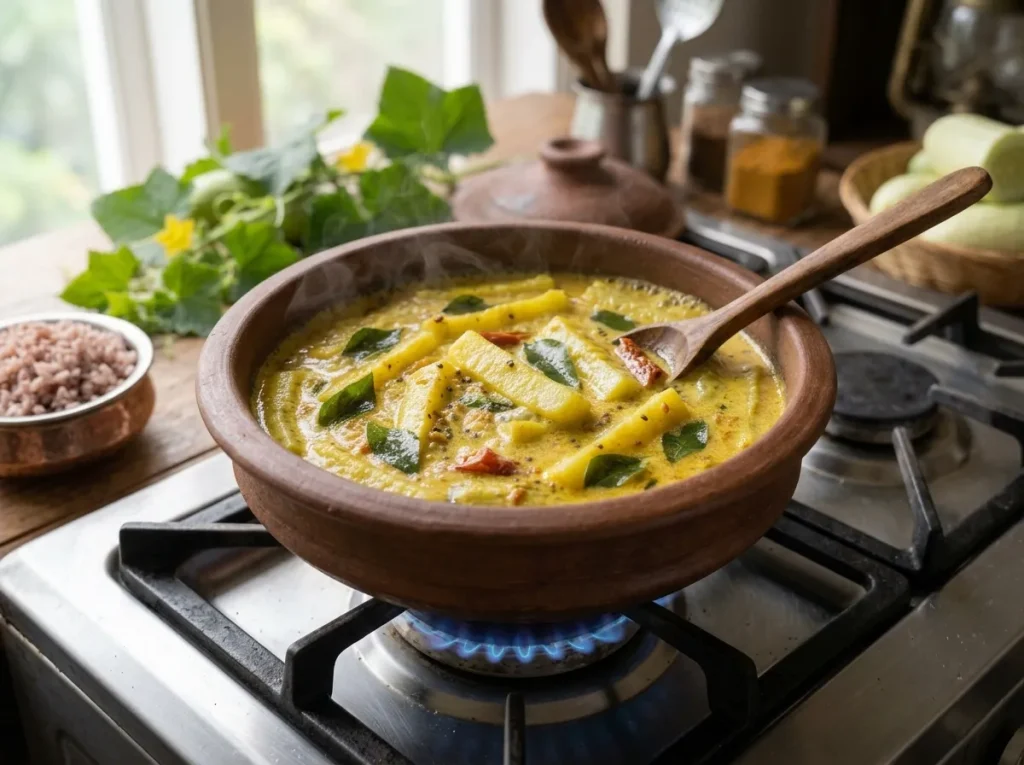
Place the pot over medium-low heat and bring the mixture to a gentle simmer. Avoid boiling it vigorously.
Cook for approximately 8–10 minutes, stirring occasionally and gently. The cucumber should begin to soften and absorb the flavors of the coconut milk and spices.
Check the texture with a fork. The cucumber should be tender but should not completely fall apart.
Step 5: Add the Thick Coconut Milk
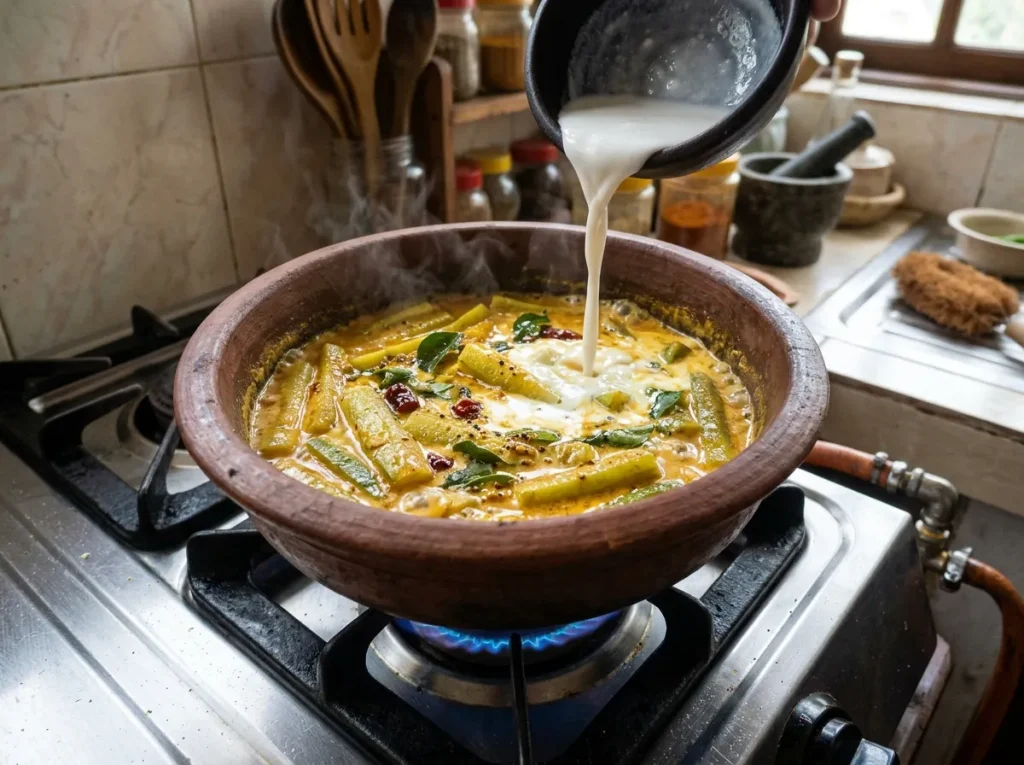
Reduce the heat to low and pour in the thick coconut milk. Stir gently to combine it with the spiced cooking liquid.
Add the curry leaves and continue cooking for another 2–3 minutes. Keep the curry at a gentle simmer rather than a rapid boil, stirring occasionally to help maintain a smooth gravy.
Taste and adjust the salt and pepper if necessary. Remove the pot from the heat as soon as the cucumber is tender and the gravy has reached your preferred consistency.
Step 6: Serve the Curry
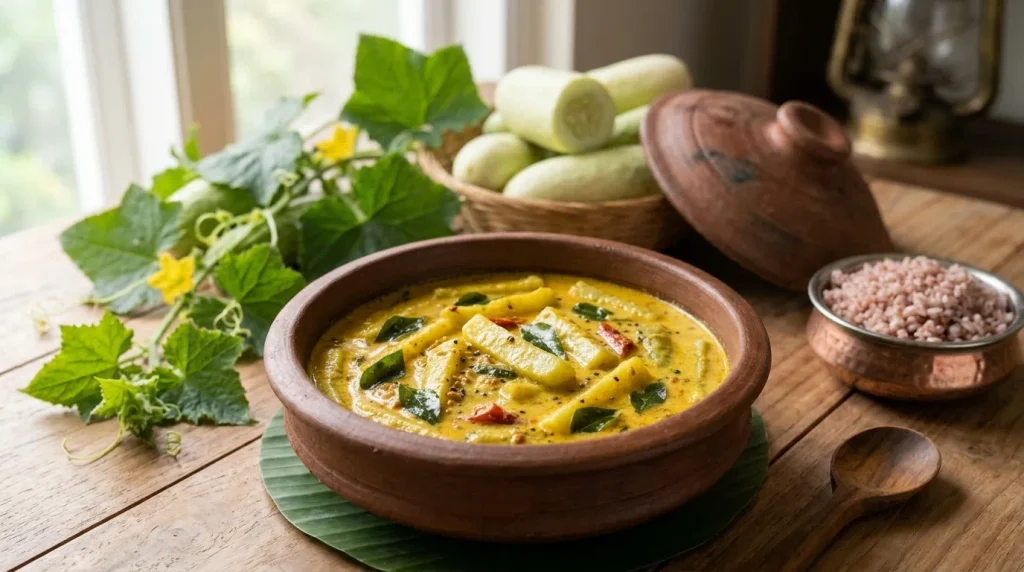
Transfer the cucumber curry to a serving bowl. Garnish with a few fresh curry leaves, sliced red chili, or a light sprinkle of black pepper if desired.
Serve warm with steamed rice and other Sri Lankan dishes.
Tips for Making the Best Cucumber Curry
Add thick coconut milk near the end. This helps preserve the creamy texture and reduces the risk of the sauce separating during prolonged cooking.
Keep the heat gentle. A vigorous boil can make the cucumber break apart and may cause the coconut milk to separate.
Cut the cucumber evenly. Uniform pieces cook more consistently and make the curry easier to serve.
Adjust the liquid if necessary. Cucumber naturally releases water during cooking. If the gravy becomes too thin, simmer gently for a little longer before adding the thick coconut milk.
Taste before serving. Coconut milk can soften the perception of spices, so adjust the salt and pepper at the end.
Use a suitable cooking pot. A clay pot can be used for a traditional presentation, but a regular saucepan works well too.
Ingredient Substitutions and Variations
Can You Use English Cucumber?
Yes. English cucumber can be used if Sri Lankan field cucumber is unavailable. Remove the seeds if they are large and watery, and monitor the cooking time because different cucumber varieties soften at different rates.
Make It Less Spicy
Reduce the number of red chilies or leave them out entirely. The mustard, fenugreek, turmeric, garlic, and curry leaves will still provide plenty of aroma.
Use Different Coconut Milk
If you have only canned coconut milk, you can dilute some with water to make a thinner cooking liquid and reserve the undiluted portion for the finishing stage. Stir well before measuring because canned coconut milk may separate in the container.
Add a Touch of Lime
For a slightly brighter flavor, add a small squeeze of lime juice after removing the curry from the heat. Start with a little and adjust to taste.
What to Serve with Sri Lankan Cucumber Curry
Sri Lankan cucumber curry is especially delicious as part of a traditional rice and curry meal. Try serving it with:
- Steamed white rice or Sri Lankan red rice
- Sri Lankan dhal curry
- Coconut sambol or another fresh sambol
- Fried fish or a mild chicken curry
- Papadums or other crispy accompaniments
- Other vegetable curries for a vegetarian meal
The creamy, mild coconut gravy balances spicy and tangy dishes, making it a useful addition to a varied meal.
Is Sri Lankan Cucumber Curry Vegan?
This recipe can be vegan and vegetarian when prepared with plant-based ingredients. Check the labels of packaged curry powders and coconut milk if you need to avoid specific additives or ingredients.
The basic recipe uses cucumber, coconut milk, vegetables, herbs, and spices without requiring meat, fish, eggs, or dairy.
Storage and Reheating
Refrigeration: Allow leftover curry to cool appropriately, then transfer it to a clean, airtight container and refrigerate promptly. For best quality, consume within two days.
Reheating: Warm the curry gently in a saucepan over low heat, stirring carefully. Avoid prolonged boiling, which can cause the coconut milk to separate and the cucumber to become too soft.
Freezing: Freezing is not ideal for this curry because cucumber can become watery and lose its texture after thawing. Freshly prepared curry generally offers the best consistency.
Frequently Asked Questions
Do I need to peel the cucumber?
Peeling is recommended for this version because it gives the curry a softer texture and allows the coconut gravy to coat the cucumber evenly. Whether peeling is necessary depends on the cucumber variety and the tenderness of its skin.
Why is my cucumber curry watery?
Cucumber naturally contains a lot of water and releases moisture as it cooks. Removing the watery seed core can help. You can also simmer the thin coconut milk gently for a little longer before adding the thick coconut milk.
Why did my coconut milk separate?
Coconut milk may separate when exposed to high heat or prolonged boiling. Reduce the heat before adding the thick coconut milk and keep the curry at a gentle simmer.
Can I make this curry ahead of time?
Yes, but cucumber softens further as it sits. For the best texture, prepare it close to serving time. If making it ahead, refrigerate it promptly and reheat gently.
What is Pipignna Kiri Hodi?
Pipignna Kiri Hodi is a name associated with Sri Lankan cucumber cooked in a coconut milk gravy. The term reflects the local vegetable and the creamy curry style commonly enjoyed with rice.
Final Thoughts
Sri Lankan Cucumber Curry, or Pipignna Kiri Hodi, is a simple way to enjoy field cucumber in a fragrant coconut milk gravy. With garlic, shallots, curry leaves, and traditional spices, this comforting dish fits naturally into a homemade Sri Lankan rice and curry meal.
Keep the heat gentle, add the thick coconut milk near the end, and season to taste for a creamy cucumber curry worth making again.
Explore More Recipes
If you enjoy homemade recipes, refreshing drinks, and delicious meal ideas, explore these recipes from DishCrave:
- Sri Lankan Cucumber Pineapple Drink – A refreshing drink made with cucumber and pineapple.
- Healthy Chicken Avocado Salad – A fresh and satisfying salad with chicken and avocado.
- Explore More Recipes – Discover more delicious recipes for everyday cooking.