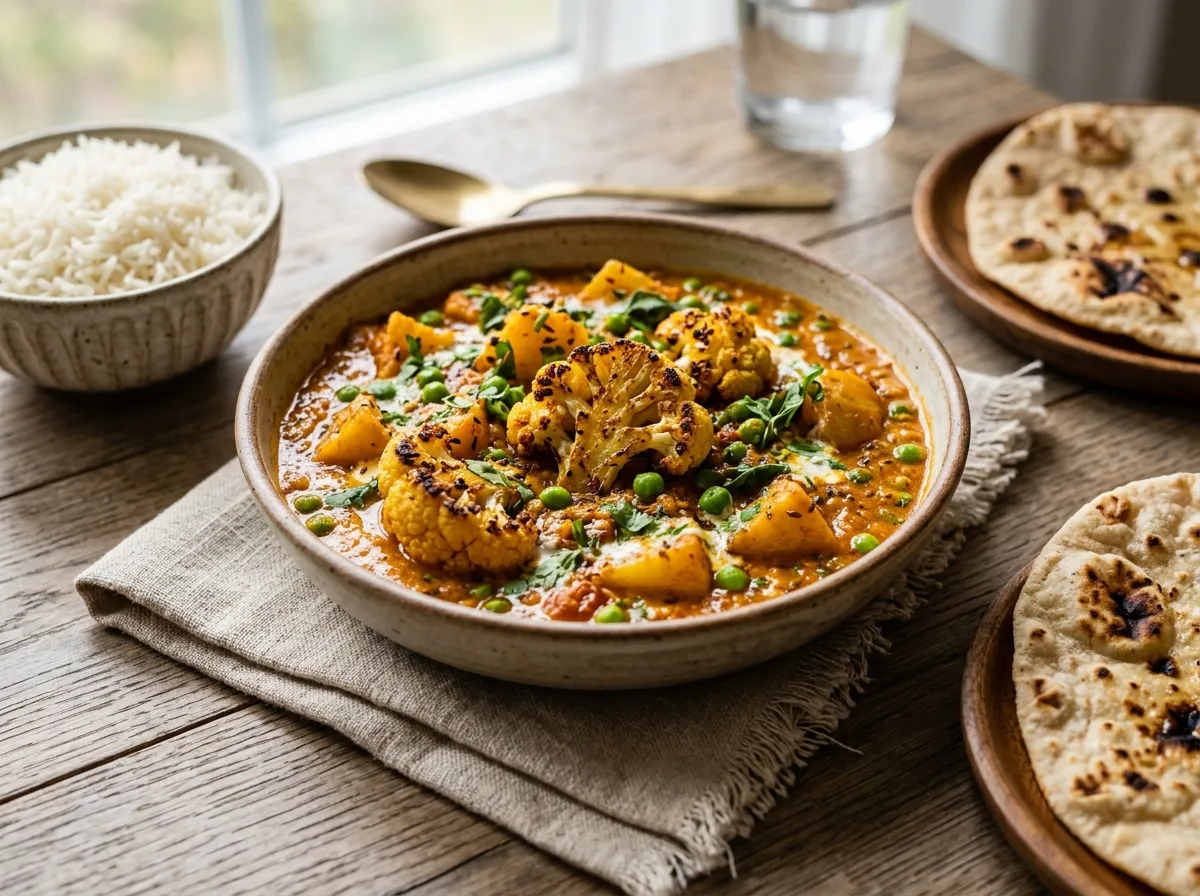
Smoky Roasted Cauliflower Potato Masala (Roasted Aloo Gobi)
Bring bold, smoky flavors to your dinner table with this Smoky Roasted Cauliflower Potato Masala, a delicious twist on traditional Indian aloo gobi. Instead of cooking the vegetables entirely in a pan, this recipe roasts cauliflower, potatoes, tomatoes, garlic, and shallots until tender and beautifully caramelized.
The roasted vegetables are then combined with a rich masala gravy made with cashews, aromatic whole spices, ground spices, and creamy yogurt. The result is a comforting curry with layers of flavor, tender vegetables, and a thick, satisfying sauce.
This roasted aloo gobi is perfect for family dinners, weekend meals, or meal preparation. Serve it hot with basmati rice, naan, chapati, or roti for a delicious Indian-inspired meal. You can also make it dairy-free by using coconut yogurt instead of regular yogurt.
Why You’ll Love This Roasted Aloo Gobi
- Deep roasted flavor: Roasting the vegetables brings out their natural sweetness and adds delicious caramelized notes.
- Creamy masala gravy: Cashews and yogurt create a rich, smooth sauce that coats every piece of cauliflower and potato.
- Packed with vegetables: Cauliflower, potatoes, tomatoes, and green peas make this a satisfying vegetable curry.
- Easy to customize: Adjust the chili powder to your preferred spice level and use coconut yogurt for a dairy-free version.
- Perfect for meal prep: The flavors develop as the curry rests, making leftovers delicious the next day.
Recipe Overview
- Preparation Time: 20 minutes
- Cooking Time: 40 minutes
- Total Time: 1 hour
- Servings: 4–6
- Course: Main Course
- Cuisine: Indian / South Asian
- Cooking Method: Roasting and simmering
- Dietary Options: Vegetarian; can be adapted to vegan and gluten-free diets
Ingredients for Smoky Roasted Cauliflower Potato Masala
For the Roasted Vegetables
- 1 medium head cauliflower, cut into bite-sized florets
- 2 large potatoes, peeled and cut into medium cubes
- 4–5 medium ripe tomatoes
- 2 whole garlic heads, with the tops trimmed to expose the cloves
- 2 small red onions, quartered, or 4 large shallots
- 2 tablespoons vegetable oil or mustard oil
- ½ teaspoon turmeric powder
- 1 teaspoon red chili powder or Kashmiri chili powder
- 1 teaspoon salt, or to taste
- ½ teaspoon freshly ground black pepper
For the Roasted Masala Paste
- ⅓ cup raw cashews
- All the roasted tomatoes
- The roasted garlic cloves, squeezed from their skins
- All the roasted onions or shallots
For the Curry Gravy
- 2 tablespoons cooking oil or ghee
- 1 teaspoon mustard seeds
- 1 bay leaf
- 1 small cinnamon stick
- 3–4 green cardamom pods
- 1 tablespoon ground coriander
- 1 teaspoon ground cumin
- ½ teaspoon turmeric powder
- 1 teaspoon red chili powder, adjusted to taste
- Salt, to taste
- ⅓ cup thick plain yogurt or curd
- 1 cup water, or as needed
- ⅔ cup fresh or frozen green peas
- Fresh coriander leaves, optional, for garnish
For a vegan version: Use coconut yogurt and vegetable oil instead of dairy yogurt and ghee. Check that any packaged ingredients meet your dietary requirements.
Make Shopping Easier
Add this recipe's ingredients to your shopping list and keep everything organized.
How to Make Smoky Roasted Cauliflower Potato Masala
Step 1: Prepare and Season the Vegetables
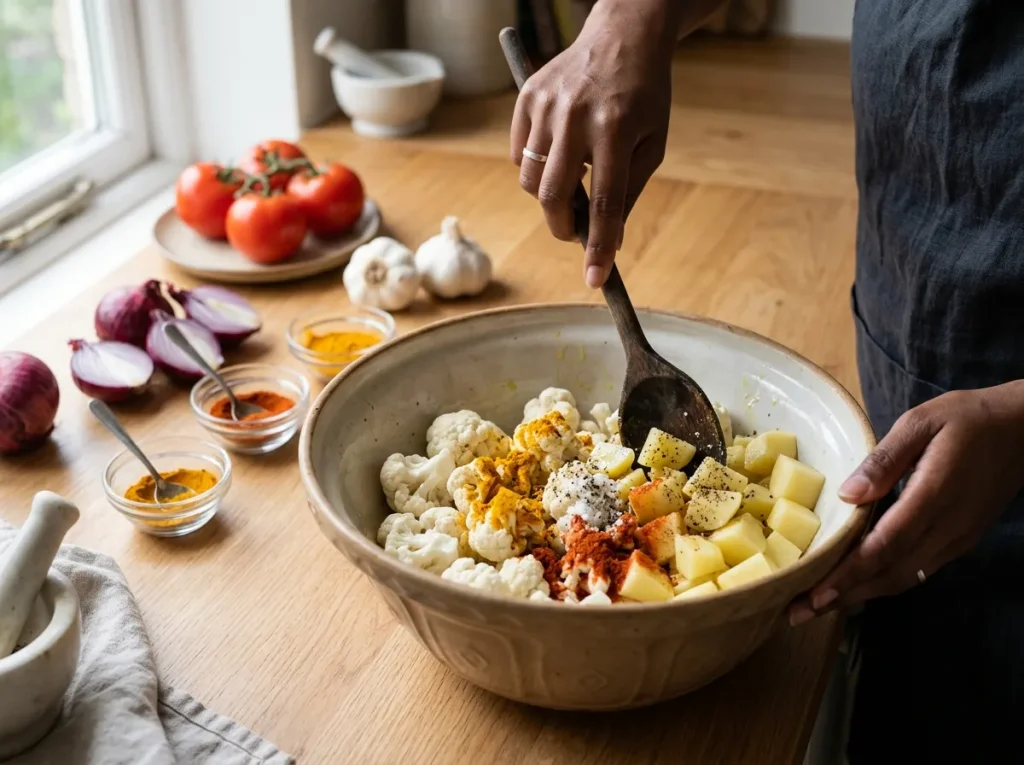
Preheat your oven to 400°F (200°C). Wash the cauliflower, cut it into bite-sized florets, and peel and cube the potatoes.
Place the cauliflower and potatoes in a large bowl. Add the oil, turmeric, red chili powder, salt, and black pepper. Toss thoroughly until the vegetables are evenly coated with the seasoning.
Transfer the vegetables to a large roasting dish. Arrange the whole tomatoes, quartered onions or shallots, and trimmed garlic heads alongside them.
Step 2: Roast Until Tender and Caramelized
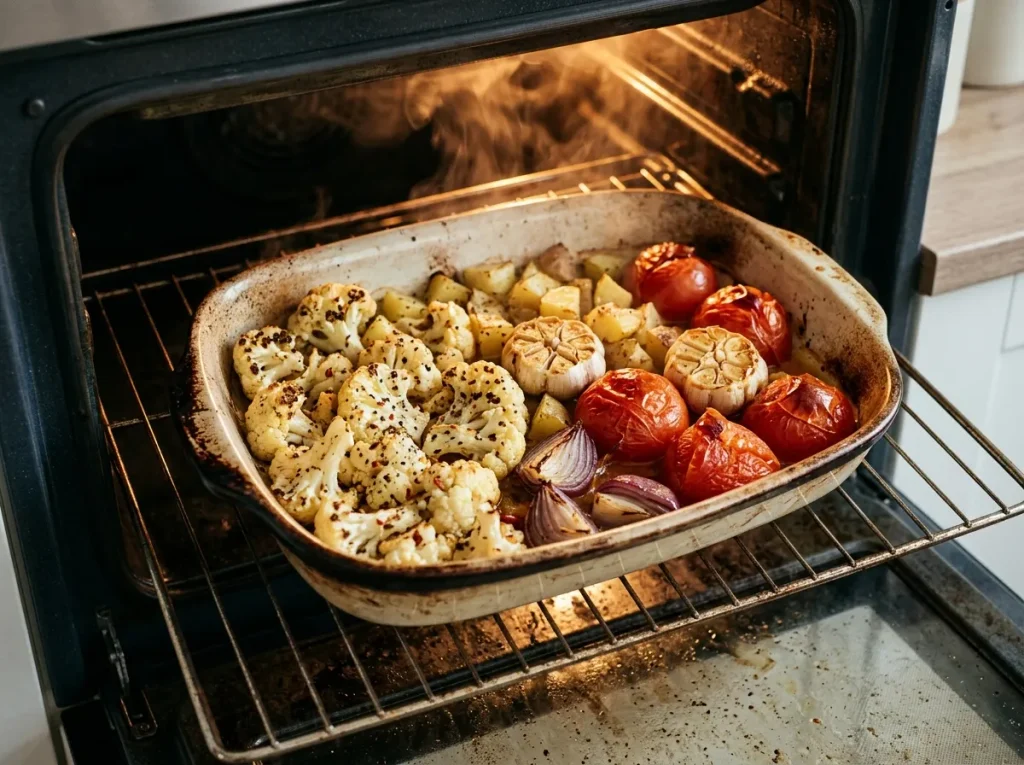
Roast the vegetables for approximately 25–30 minutes, checking them as they cook. Turn the cauliflower and potatoes partway through if needed for more even browning.
The cauliflower should have lightly caramelized edges, and the potatoes should be nearly tender. The tomatoes should soften and blister, while the garlic and onions should become soft and fragrant.
If the potatoes need more time, continue roasting until they can be pierced easily with a fork. Cooking time may vary depending on the size of the vegetable pieces and your oven.
Step 3: Make the Roasted Tomato-Cashew Paste
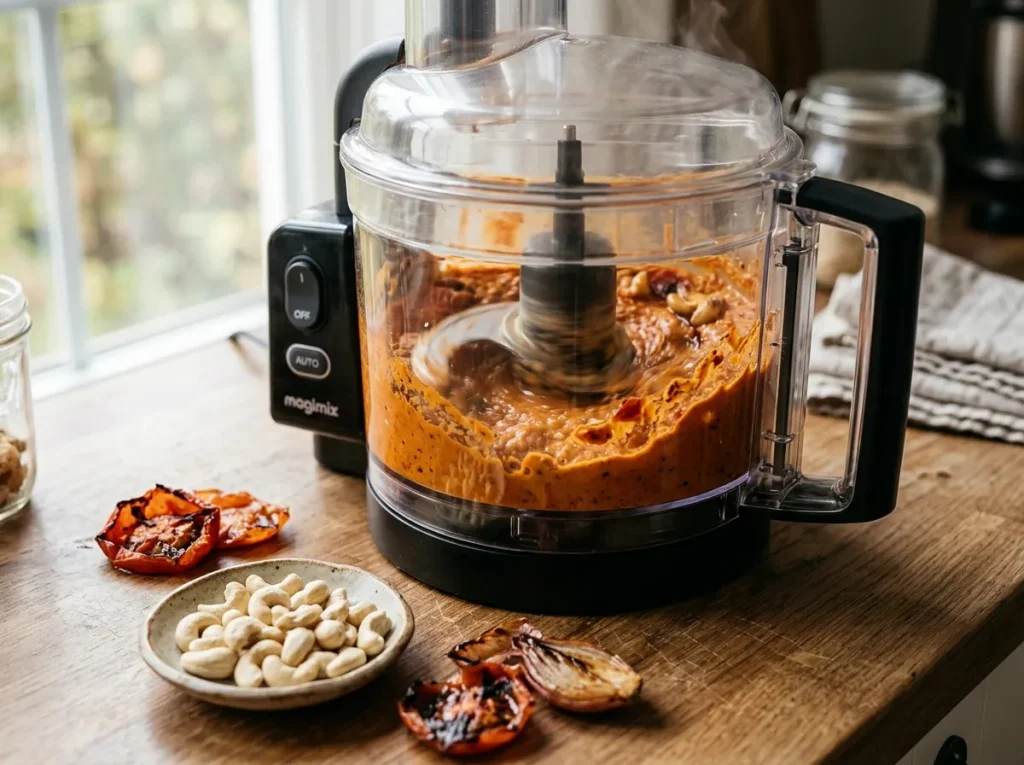
Carefully remove the roasted tomatoes, garlic, and onions or shallots from the roasting dish.
Squeeze the softened garlic cloves out of their skins. Add the roasted garlic, tomatoes, onions or shallots, and raw cashews to a food processor or blender.
Blend until a thick, mostly smooth paste forms. If necessary, add a small splash of water to help the ingredients blend. Set the roasted masala paste aside.
For a smoother gravy, blend the paste thoroughly. For a more rustic curry, leave a little texture.
Step 4: Temper the Whole Spices
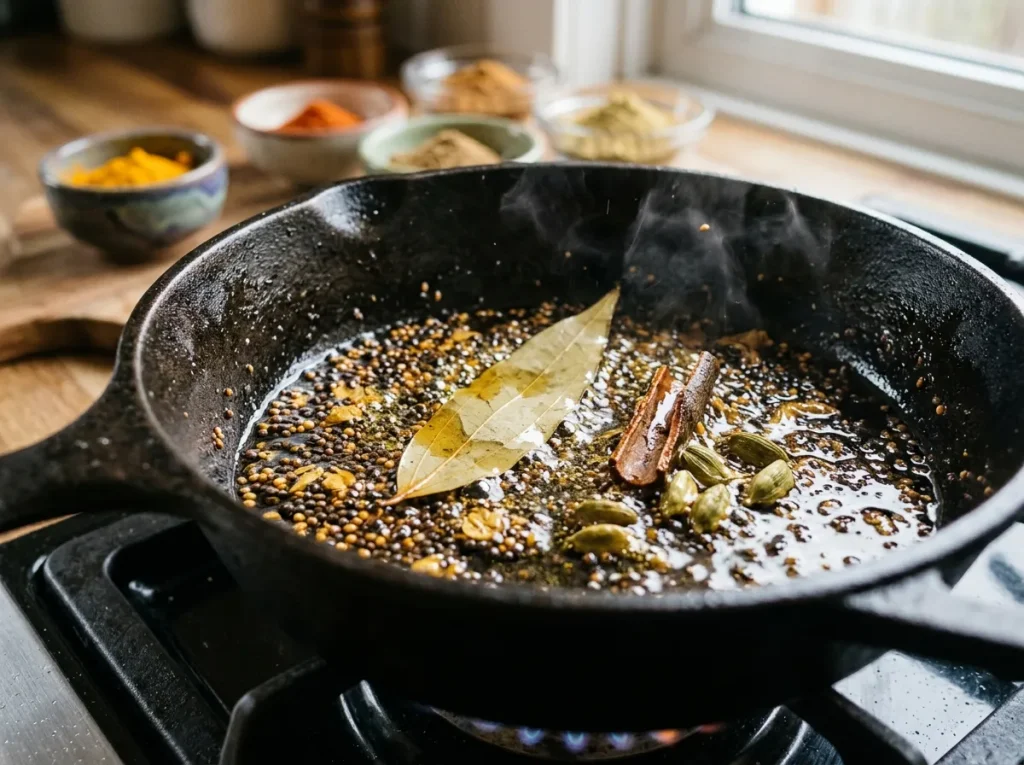
Heat 2 tablespoons of cooking oil in a heavy-bottomed pot or Dutch oven over medium heat.
Add the mustard seeds and allow them to begin popping. Add the bay leaf, cinnamon stick, and green cardamom pods. Stir for approximately 30–60 seconds until the spices become fragrant.
Keep the heat moderate so the whole spices release their aroma without burning.
Step 5: Cook the Masala Gravy
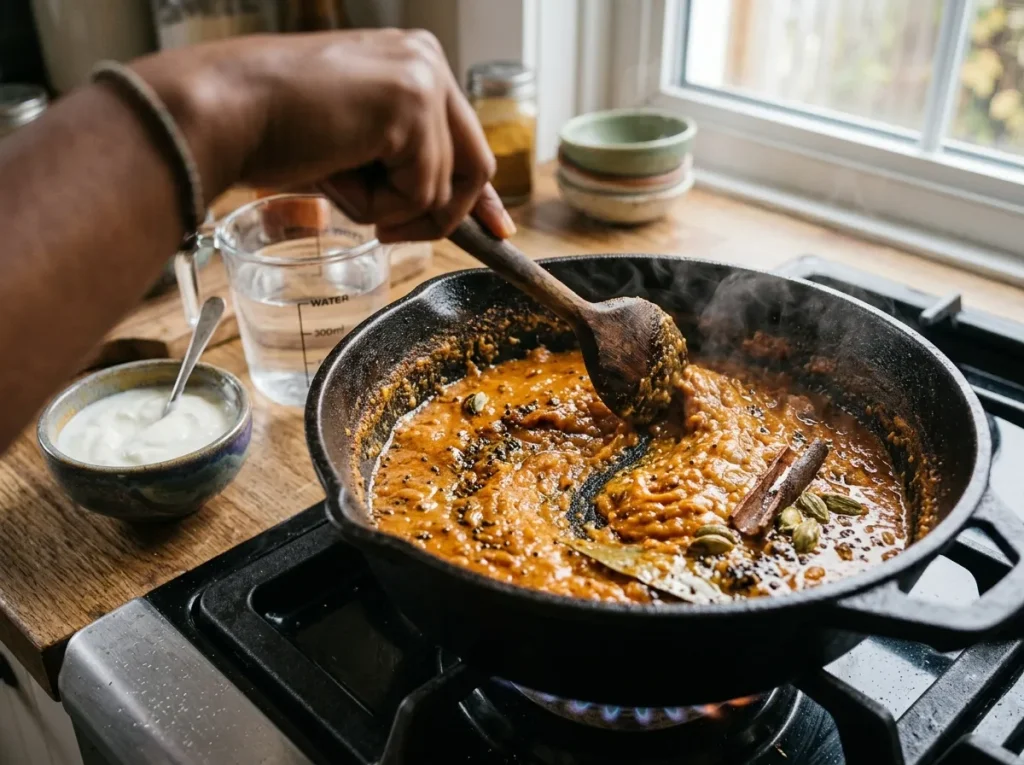
Add the roasted tomato-cashew paste to the pot. Stir carefully and cook for 2–3 minutes to combine it with the aromatic oil and whole spices.
Add the ground coriander, cumin, turmeric, red chili powder, and salt. Cook for another 2–3 minutes, stirring frequently to prevent the paste from sticking to the bottom of the pot.
Lower the heat. Gradually stir in the yogurt until incorporated. Add the water and mix well to create a creamy gravy.
Bring the mixture to a gentle simmer. Avoid boiling it vigorously after adding yogurt, as high heat may cause the sauce to split.
Step 6: Add the Roasted Vegetables and Green Peas
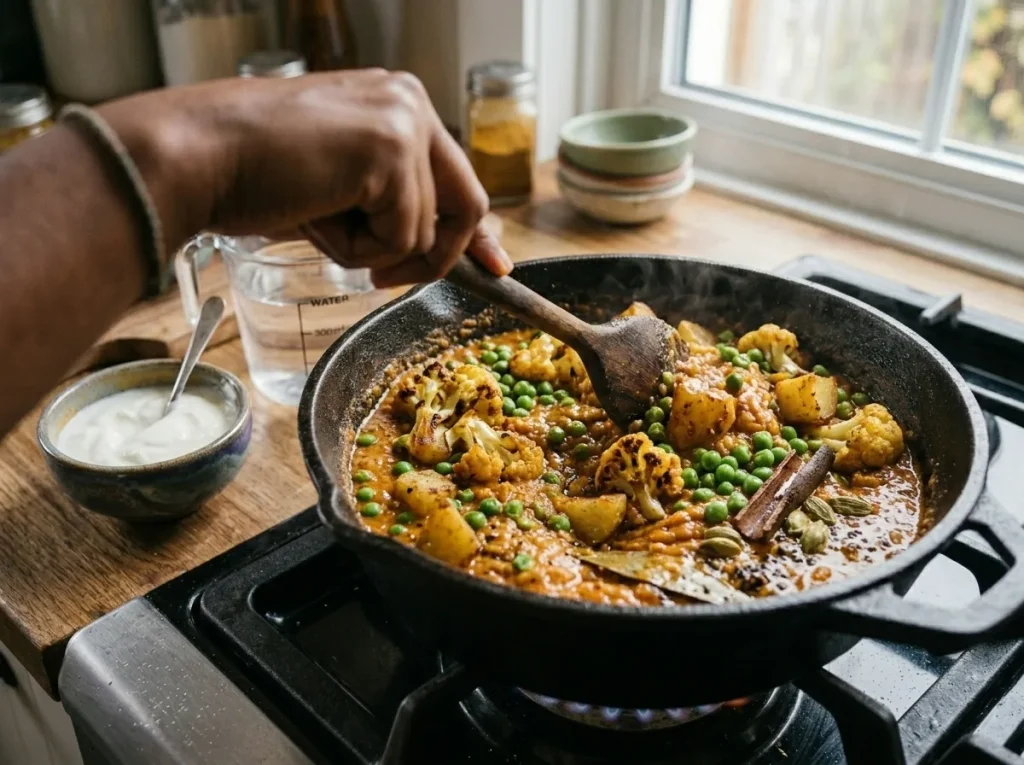
Gently transfer the roasted cauliflower and potatoes into the simmering gravy.
Add the green peas and fold everything together carefully. Try not to break the cauliflower florets or mash the potatoes.
If your Cauliflower Potato Masala looks too thick, add a little more water and stir gently until the gravy reaches your preferred consistency.
Step 7: Simmer and Finish the Cauliflower Potato Masala
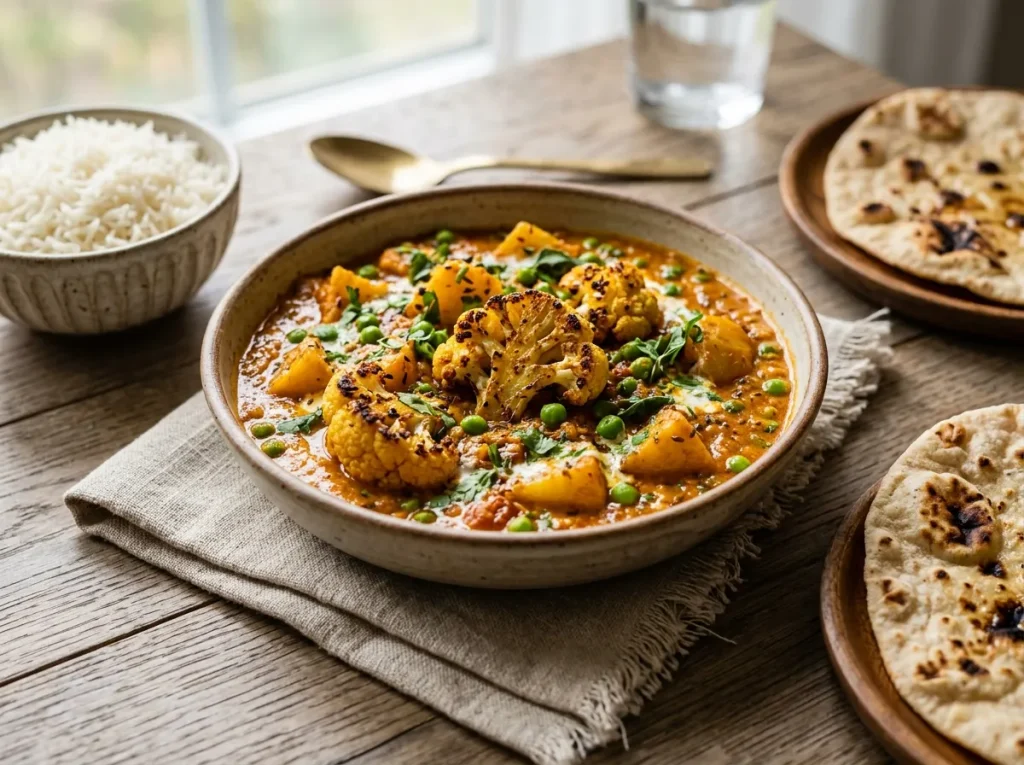
Cover the pot and simmer over low heat for 5–7 minutes, allowing the vegetables to absorb the flavors of the roasted masala.
Check that the potatoes are fully tender and the peas are cooked. Taste the gravy and adjust the salt or chili powder if needed.
Turn off the heat and allow the curry to rest for a few minutes. Garnish with freshly chopped coriander leaves if desired.
Serve your Smoky Roasted Cauliflower Potato Masala hot with basmati rice, naan, chapati, or roti.
Expert Tips for the Best Roasted Aloo Gobi
Roast the Aromatics Properly
The roasted tomatoes, garlic, and shallots are essential to the flavor of this recipe. Allow them to soften and develop some caramelization, but avoid burning them, as burnt garlic can make the gravy bitter.
Cut the Vegetables Evenly
Cut the potatoes into similar-sized cubes and the cauliflower into evenly sized florets. This helps the vegetables roast at a similar rate.
Avoid Crowding the Roasting Dish
Spread the vegetables in a single layer whenever possible. Overcrowding traps steam and can prevent the vegetables from browning properly. Use two trays if necessary.
Blend the Gravy to Your Preferred Texture
Blend the roasted ingredients until smooth for a restaurant-style sauce. If you prefer a rustic homemade curry, leave the paste slightly textured.
Adjust the Spice Level
For a milder curry, reduce the red chili powder or use Kashmiri chili powder for a gentler heat and vibrant color. Add more chili gradually if you prefer a spicier dish.
Prevent the Yogurt from Curdling
Lower the heat before adding yogurt and stir it in gradually. Thick, plain yogurt works well. For extra stability, temper the yogurt with a little warm gravy before adding it to the pot.
What to Serve with Cauliflower Potato Masala
This Smoky Roasted Cauliflower Potato Masala pairs well with a variety of sides, making it easy to create a delicious and satisfying meal:
- Basmati rice: Fluffy rice soaks up the aromatic masala gravy.
- Naan: Soft naan is ideal for scooping up the roasted vegetables and sauce.
- Chapati or roti: Everyday flatbreads make a simple, satisfying accompaniment.
- Jeera rice: Cumin-flavored rice complements the warm whole spices.
- Fresh salad: A crisp cucumber and tomato salad adds a refreshing contrast to the rich curry.
Variations You Can Try
Vegan Roasted Aloo Gobi
Replace the yogurt with unsweetened coconut yogurt and use vegetable oil instead of ghee. Make sure the yogurt is suitable for cooking and does not contain added sugar or strong flavorings.
Extra-Creamy Cashew Masala
For a richer gravy, soak the cashews in warm water for 15–20 minutes before blending. Drain them before adding them to the roasted aromatics. Blend thoroughly for a smooth sauce.
Make It Spicier
Add a little extra red chili powder or a finely chopped green chili to the gravy while cooking. Adjust gradually to avoid overpowering the roasted vegetable flavors.
Add More Vegetables
You can include carrots or bell peppers, cut into suitable roasting sizes. Keep in mind that different vegetables cook at different rates, so check them individually and remove any that finish early.
Storage and Reheating
Refrigeration: Allow the curry to cool, then transfer it to an airtight container and refrigerate within two hours of cooking. Use refrigerated leftovers within 3–4 days.
Reheating: Reheat the curry in a saucepan over medium-low heat, stirring gently until it is steaming hot throughout. Add a splash of water if the gravy has thickened. Avoid vigorous stirring to keep the cauliflower and potatoes intact.
Freezing: The curry can be frozen in airtight, freezer-safe containers for around 2–3 months for best quality. However, the yogurt-based gravy may separate slightly after thawing, and the potatoes may become softer. Cool promptly, freeze in portions, and thaw in the refrigerator before reheating thoroughly.
Frequently Asked Questions
Is roasted aloo gobi different from traditional aloo gobi?
Yes. Traditional aloo gobi often cooks cauliflower and potatoes directly in a pan with spices. This version roasts the vegetables and aromatics first, then combines them with a blended tomato-cashew gravy for a deeper, creamier flavor.
Can I make this recipe without cashews?
Yes. You can omit the cashews, although the gravy will be less creamy. For a suitable alternative, try blending a small amount of sunflower seeds that have been soaked and drained, provided they meet your dietary needs.
Can I prepare the vegetables ahead of time?
Yes. Roast the vegetables and prepare the masala paste in advance. Refrigerate them separately in airtight containers and combine them with the freshly prepared curry gravy when you are ready to finish the dish.
Is cauliflower potato masala vegan?
The recipe as written contains yogurt or curd, and it may use ghee. To make it vegan, use plant-based coconut yogurt and vegetable oil. Check that all other ingredients are plant-based.
Is this recipe gluten-free?
The curry ingredients listed are naturally gluten-free in their basic forms. Check the labels of packaged spices and other ingredients for possible cross-contamination, and serve with rice or certified gluten-free flatbread if needed.
How can I make the gravy thinner?
Add warm water a little at a time while the curry simmers, stirring gently until you reach the desired consistency.
Final Thoughts
Smoky Roasted Cauliflower Potato Masala is a comforting twist on classic aloo gobi, combining beautifully roasted vegetables with a creamy, aromatic cashew-tomato gravy. The roasted garlic, caramelized tomatoes, warm spices, and tender green peas create a satisfying dish that is perfect for sharing with family and friends.
Serve Cauliflower Potato Masala with your favorite rice or flatbread, adjust the spice level to suit your taste, and enjoy a homemade curry full of rich, roasted flavor.
Explore More Delicious Recipes
Looking for more delicious vegetable dishes and Sri Lankan-inspired meals? Try these recipes from DishCrave:
- Sri Lankan Warm Vegetable Salad – Enjoy a comforting vegetable dish with a variety of flavors and textures.
- Sri Lankan Cauliflower Devilled – Try a spicy, flavorful cauliflower dish with a delicious Sri Lankan twist.
- Browse All Recipe Categories – Discover more recipes, from satisfying main dishes to snacks, desserts, and refreshing drinks.