Chayote (Thorny Courgette): Benefits, Nutrition, Taste & Uses
Chayote, also known as thorny courgette, sechio, or chayote squash, is an unusual green fruit that is commonly cooked and eaten like a vegetable. With its pear-like shape, crisp texture, mild flavor, and impressive nutritional profile, chayote has become a popular ingredient in many cuisines around the world.
Native to Central America, chayote belongs to the Cucurbitaceae family, the same plant family as zucchini, pumpkins, cucumbers, and melons. It can be eaten raw or cooked and works well in salads, soups, stews, stir-fries, and many other dishes.
If you have never cooked with this distinctive fruit, learning how to prepare chayote is an easy way to add variety to your everyday meals.
What Is Thorny courgette?
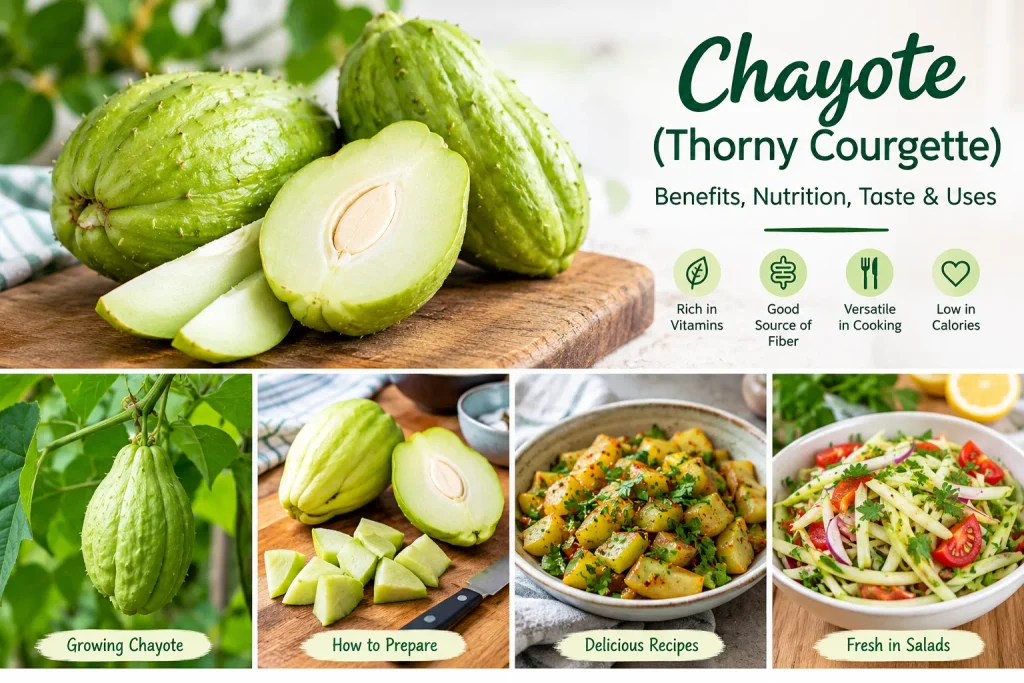
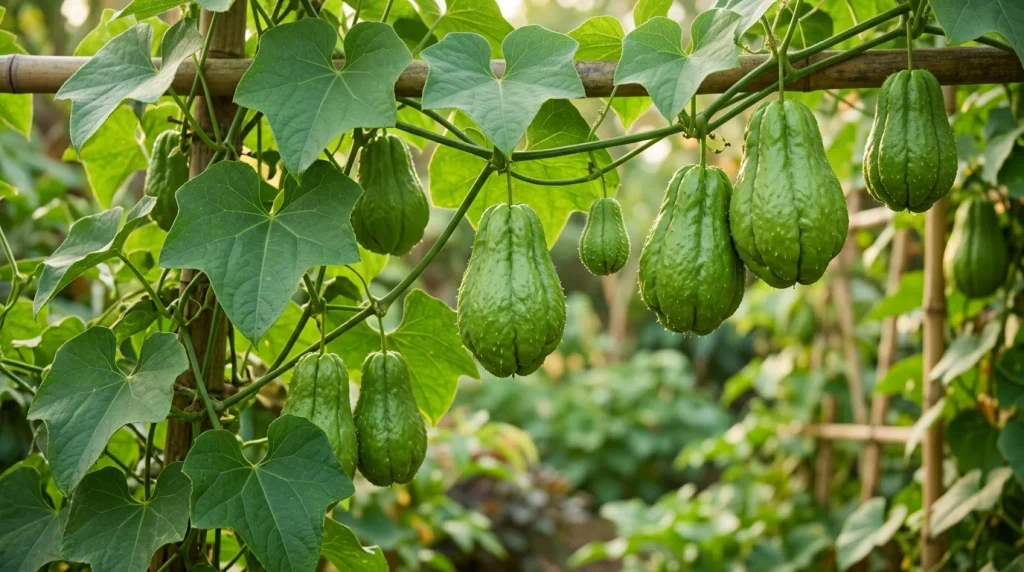
Chayote (Sechium edule) is a green, pear-shaped fruit that is commonly used as a vegetable. It originated in Central America and is now grown and enjoyed in many tropical and subtropical regions.
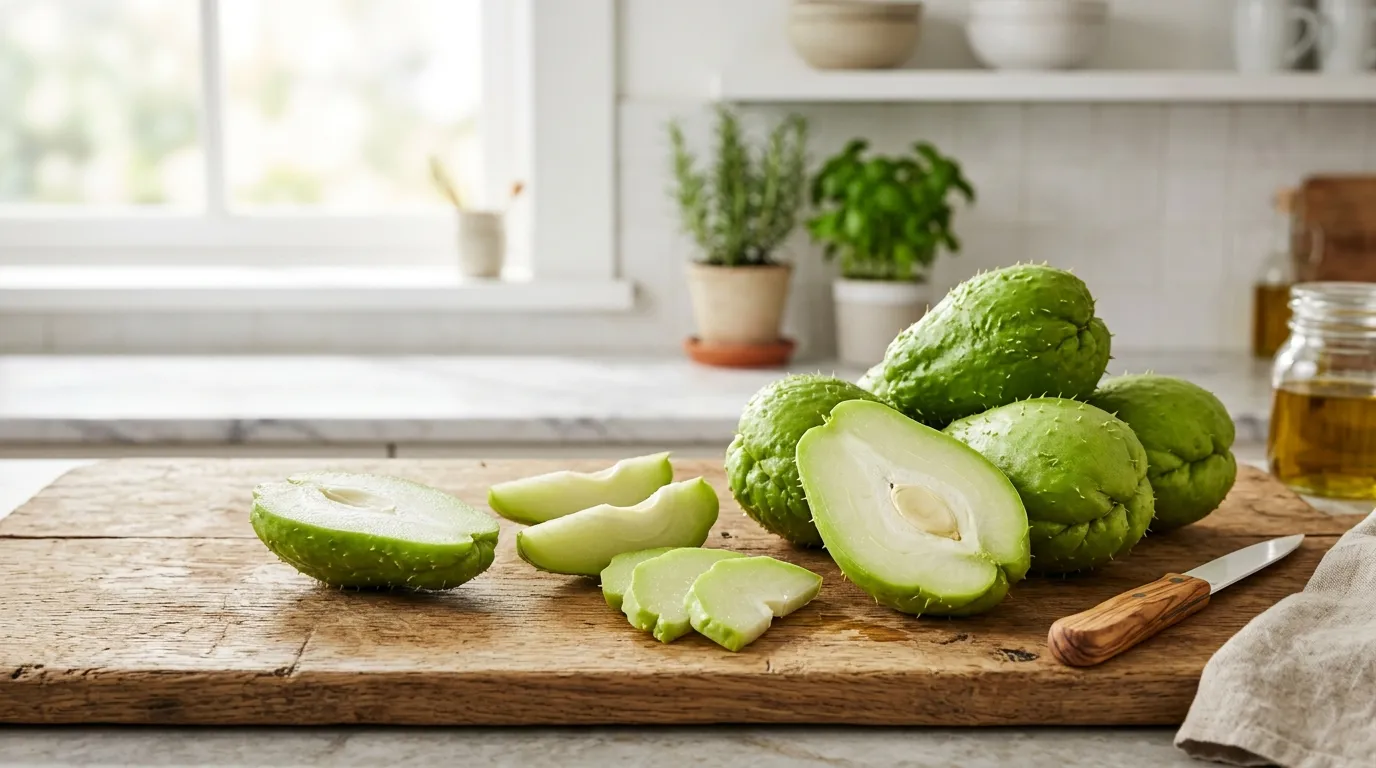
The fruit usually has pale green skin, although some varieties can be darker or yellowish. Its surface may be smooth or covered with small spines, depending on the variety. Inside is a single large, edible seed surrounded by firm, crisp flesh.
Chayote is sometimes called thorny courgette, sechio, vegetable pear, vegetable squash, and chayote squash.
Its mild flavor makes it particularly versatile. The taste is often compared with zucchini or summer squash, with a slightly sweet and refreshing character.
What Does Thorny Courgette Taste Like?
Thorny courgette has a mild, fresh, and slightly sweet flavor. Its crisp texture when raw is similar to cucumber, while cooking makes the flesh softer and more tender.
The flavor is subtle enough to absorb the seasonings and ingredients used in a recipe. This makes chayote suitable for both simple side dishes and more elaborate meals.
Young thorny courgette fruits are especially good for eating raw because they tend to have a tender texture and delicate flavor.
Chayote Nutrition
Chayote is naturally low in calories and contains a high proportion of water. It also provides dietary fiber and several vitamins and minerals.
According to commonly cited food-composition data, 100 grams of raw chayote contains approximately 19 calories, making it a light ingredient for a wide range of meals.
Thorny courgette provides nutrients including:
- Vitamin C
- Folate
- Vitamin B vitamins
- Dietary fiber
- Potassium
- Magnesium
- Calcium
- Phosphorus
- Zinc
It also contains naturally occurring plant compounds, including antioxidants.
Because nutritional values can vary depending on variety, growing conditions, and preparation method, chayote is best considered as one nutritious ingredient within a varied diet rather than a source of any single nutrient.
Potential Benefits of Chayote
Adding chayote to your diet can contribute useful nutrients while keeping meals light and flavorful.
1. Provides Vitamin C
Thorny courgette contains vitamin C, an important nutrient that contributes to normal immune function and helps protect cells from oxidative stress.
Vitamin C is also involved in normal collagen formation, which is important for healthy skin, bones, cartilage, and connective tissues.
2. A Source of Dietary Fiber
Chayote provides dietary fiber, which is important for normal digestive health.
Including fiber-rich vegetables and fruits in meals can also help make food more satisfying and contribute to a balanced diet.
3. Naturally Low in Calories
With its high water content and relatively low calorie content, chayote can be a useful ingredient when preparing lighter meals.
It can be steamed, boiled, sautéed, or added to soups and salads without making a dish excessively heavy.
4. Provides Folate
Chayote contains folate, a B vitamin that plays an important role in normal cell division and the formation of red blood cells.
Folate is particularly important during periods of rapid growth, although nutritional needs should always be discussed with a qualified healthcare professional when specific dietary requirements are involved.
5. Contains Minerals
Thorny courgette provides several minerals, including potassium, magnesium, calcium, and phosphorus. These nutrients have important roles throughout the body and are best obtained as part of a varied and balanced diet.
Can You Eat Chayote Raw?
Yes, chayote can be eaten raw.
Young, tender chayote can be thinly sliced, grated, or cut into small pieces and added to salads. Its crisp texture makes it a refreshing addition to vegetable dishes.
Raw chayote has a mild flavor, so it pairs well with ingredients such as lemon or lime juice, herbs, onions, tomatoes, and light dressings.
If the chayote has a tough skin or pronounced spines, take care when preparing it and use a kitchen towel or suitable gloves when necessary.
Do You Need to Peel Thorny Courgette?
Whether you need to peel chayote depends on the fruit and the recipe.
Young chayote with tender skin can sometimes be cooked with the skin intact. Larger or more mature fruits may have tougher skin, making peeling preferable.
If the surface has noticeable spines, handle the fruit carefully before peeling it.
The large central seed is also edible, although many recipes remove it depending on the desired texture and presentation.
How to Prepare Chayote
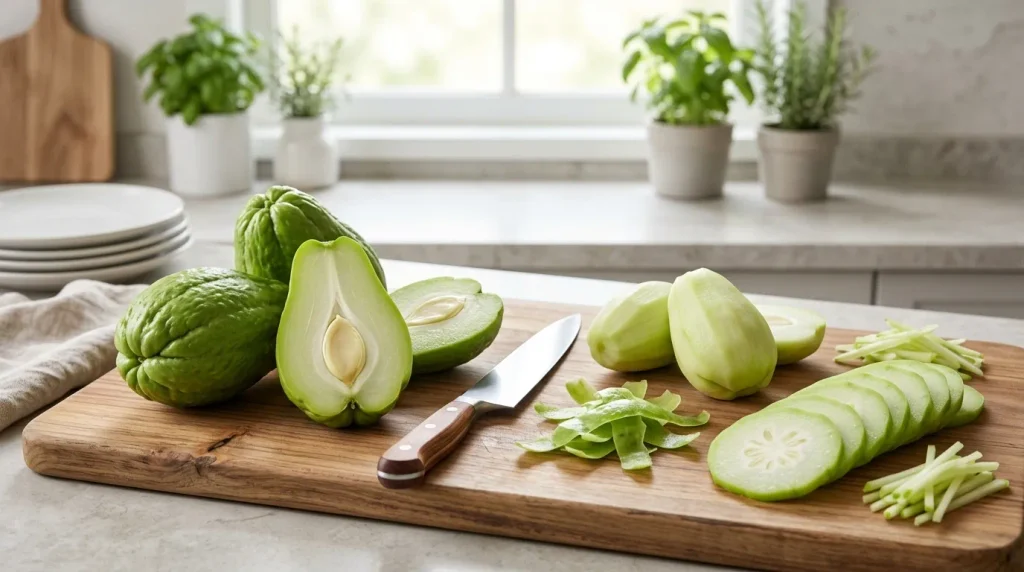
Preparing chayote is relatively simple.
- Wash the fruit thoroughly under cool running water.
- Dry it with a clean kitchen towel.
- Peel the skin if it is tough or if your recipe calls for peeled chayote.
- Cut the chayote in half lengthwise.
- Remove the seed if desired.
- Slice or dice the flesh according to your recipe.
Once prepared, chayote can be cooked immediately or incorporated into salads and other dishes.
How to Cook Chayote
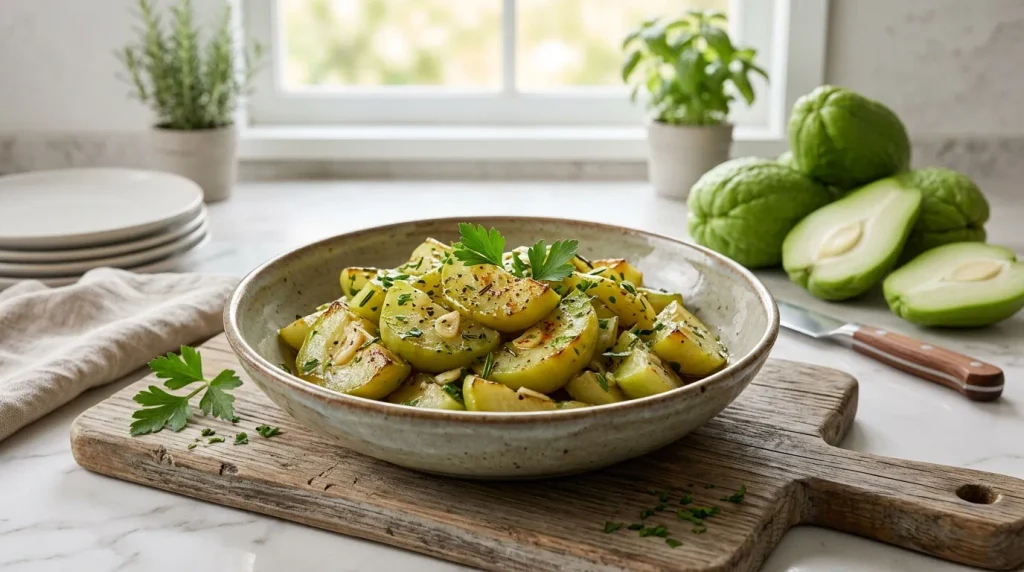
Chayote is a versatile ingredient and can be prepared using many different cooking methods.
Steamed Chayote
Steaming is one of the simplest ways to prepare chayote. Cut the fruit into evenly sized pieces and steam until tender.
Season with olive oil, herbs, black pepper, lemon juice, or your favorite spices for a simple side dish.
Boiled Chayote
Chayote can be boiled until tender and then added to soups, salads, or vegetable dishes.
Avoid overcooking it if you want to retain some of its texture.
Sautéed Chayote
Thinly sliced chayote can be quickly sautéed with olive oil, garlic, onions, herbs, or spices.
This method works particularly well when you want the vegetable to remain slightly crisp.
Chayote in Soups and Stews
Chayote is commonly used in soups and stews. Its mild flavor allows it to absorb the flavors of broths, herbs, vegetables, and spices.
Add it toward the later part of cooking when possible so the pieces retain some of their texture.
Baked or Stuffed Chayote
Larger chayote fruits can be cut in half, cooked until partially tender, and then stuffed with ingredients such as vegetables, herbs, grains, cheese, or meat.
The filled halves can then be baked until completely tender.
Fried Chayote
Thin slices of chayote can also be coated in a light batter and fried. This creates a crisp exterior while keeping the inside soft and tender.
How Is Chayote Used in Cooking?
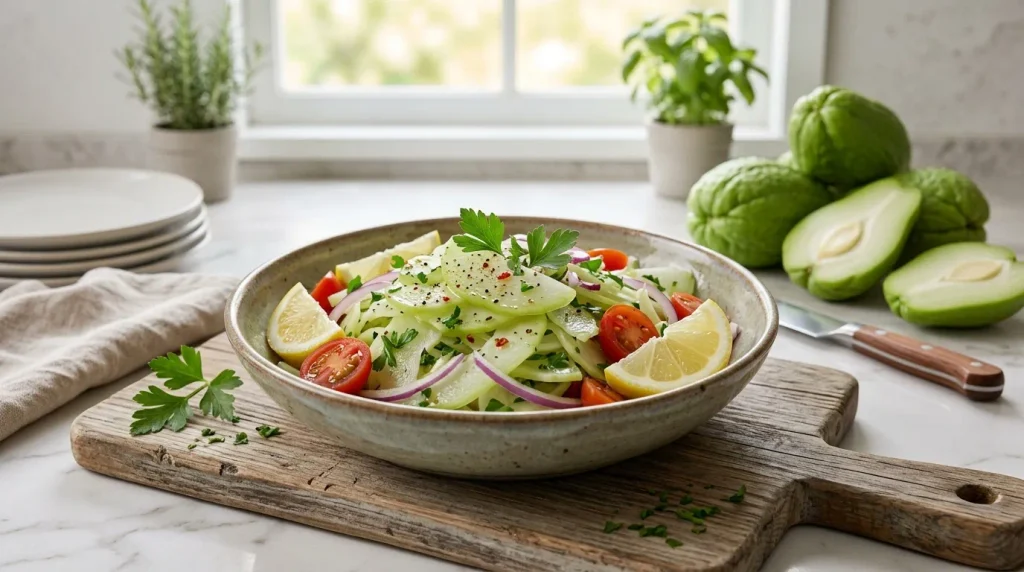
Chayote is especially popular in Latin American, Caribbean, Asian, and other tropical cuisines.
It can be used in:
- Fresh salads
- Vegetable soups
- Stews
- Stir-fries
- Side dishes
- Stuffed vegetables
- Pickles
- Fritters
- Casseroles
Because of its mild flavor, chayote works with a wide range of herbs, spices, sauces, and other vegetables.
Chayote vs. Zucchini
Chayote and zucchini are both members of the Cucurbitaceae family and can be prepared in similar ways, but they are different fruits.
Zucchini generally has a softer texture and a more recognizable squash flavor. Chayote is firmer and more crisp, particularly when raw, and has a mild flavor that can be slightly sweet.
Both are versatile ingredients and can be steamed, sautéed, baked, or added to soups and stews.
How to Choose Fresh Chayote
When shopping for chayote, look for fruits that feel firm and heavy for their size.
Fresh chayote should have relatively smooth, firm skin without extensive soft spots, deep bruising, or signs of spoilage.
Smaller fruits are often tender and suitable for eating raw, while larger fruits can work well in cooked dishes.
Store fresh chayote in the refrigerator if you are not planning to use it immediately.
Frequently Asked Questions About Chayote
Is chayote a fruit or a vegetable?
Botanically, chayote is a fruit because it develops from the flower of the plant and contains a seed. In cooking, however, it is commonly treated as a vegetable.
What is another name for chayote?
Chayote is also known as thorny courgette, sechio, vegetable pear, vegetable squash, and chayote squash. Names can vary between countries and regions.
Can you eat chayote seeds?
Yes. The central seed of chayote is edible. However, some recipes remove it before cooking depending on personal preference and the desired texture.
Does chayote need to be cooked?
No. Young, tender chayote can be eaten raw. It can be sliced or grated and added to salads and other fresh dishes.
What does chayote taste like?
Chayote has a mild, crisp, and slightly sweet flavor. It is often compared with zucchini, cucumber, or summer squash.
Is chayote good for everyday cooking?
Yes. Its mild flavor, low calorie content, and versatility make chayote suitable for many everyday recipes, including soups, salads, stir-fries, and simple side dishes.
Final Thoughts
Chayote, or thorny courgette, is an unusual but versatile fruit that deserves a place in the kitchen. Its mild flavor, crisp texture, and ability to work in both raw and cooked dishes make it easy to incorporate into everyday meals.
From fresh salads and steamed vegetables to hearty soups and stuffed dishes, there are many ways to enjoy chayote. If you come across this distinctive green fruit at your local market, give it a try and discover a simple ingredient with plenty of culinary possibilities.
You May Also Like
Barley Salad with Pesto and Tomatoes