Authentic Sri Lankan Wood Apple Jam Recipe (Divul Jam)
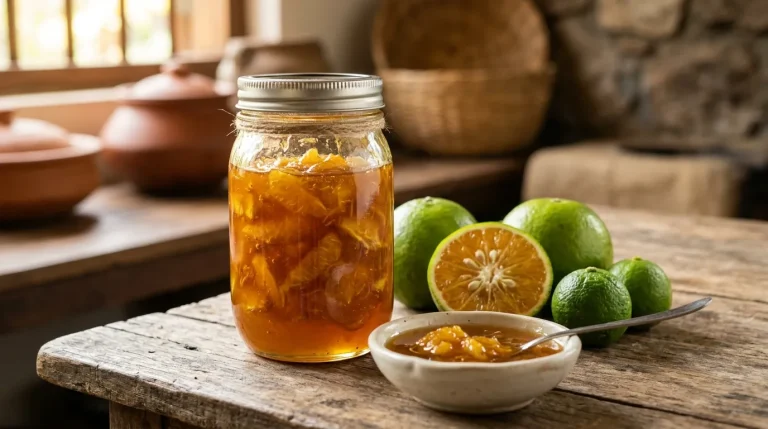
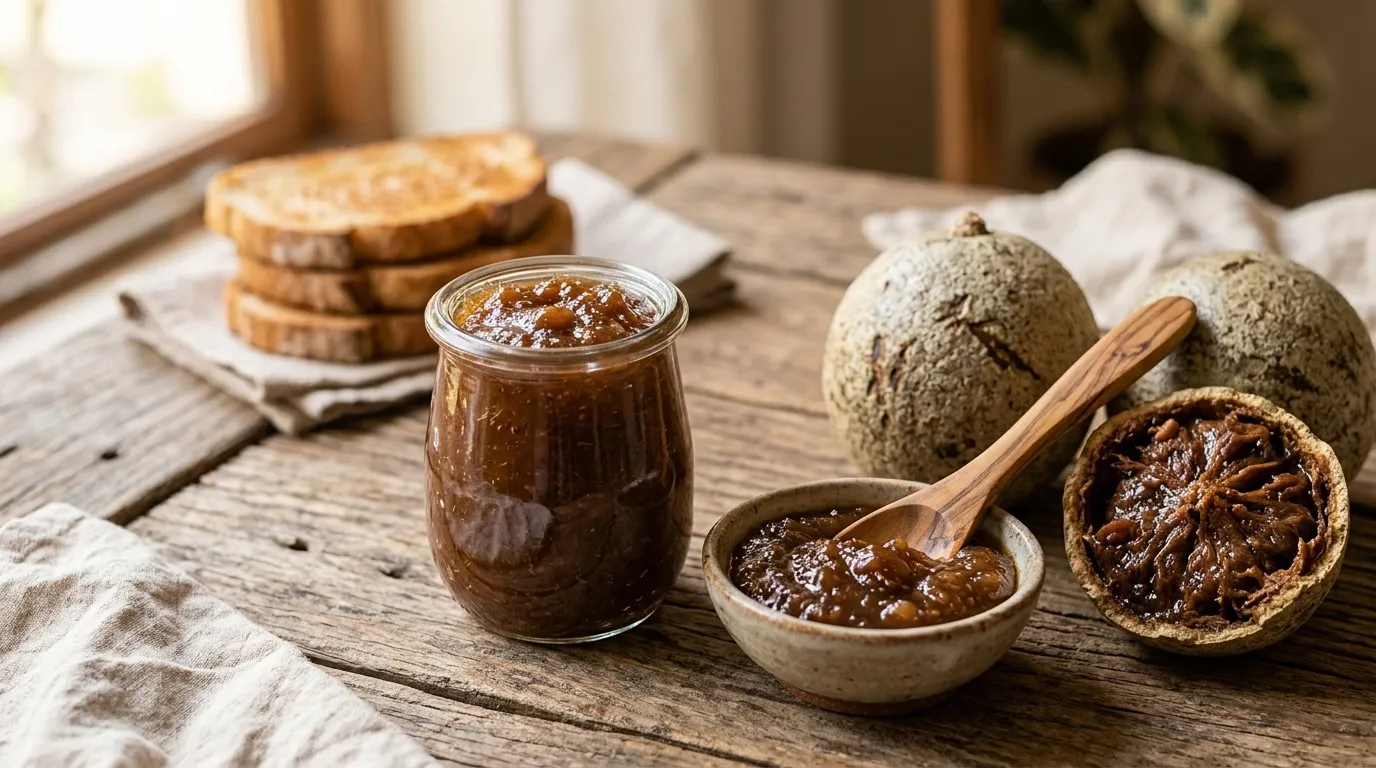
Wood Apple Jam, also known as Divul Jam in Sri Lanka, is a delicious homemade fruit preserve made from the rich, aromatic pulp of ripe wood apples. With its naturally tangy flavor and distinctive tropical aroma, wood apple creates a wonderfully sweet-and-sour jam that pairs beautifully with toast, roti, pancakes, and other breakfast favorites.
This Sri Lankan Wood Apple Jam Recipe uses simple ingredients, including ripe wood apple pulp, sugar, water, and fresh lime juice. The pulp is softened, strained to remove seeds and tough fibers, and slowly cooked until it becomes thick, glossy, and spreadable.
If you enjoy homemade fruit preserves and traditional Sri Lankan flavors, this easy Divul Jam recipe is a lovely way to turn seasonal wood apples into a special treat for your family.
What Is Wood Apple Jam?
Wood apple jam is a fruit preserve made from the pulp of wood apple, a tropical fruit known as Divul in Sinhala. The fruit has a hard outer shell and soft, dark brown pulp with a distinctive sweet, sour, and slightly earthy flavor.
Unlike many fruit jams made with berries or citrus fruits, wood apple jam has a deep, aromatic taste that makes it unique. Sugar balances the fruit’s natural tartness, while a little lime juice adds freshness.
Homemade Divul Jam can be enjoyed as a breakfast spread, served with traditional Sri Lankan snacks, or used as a flavorful addition to a sweet-and-savory platter.
Why You’ll Love This Wood Apple Jam Recipe
- Authentic Sri Lankan flavor: Enjoy the distinctive taste of ripe wood apples in a traditional-style preserve.
- Simple ingredients: You only need wood apple pulp, sugar, water, and fresh lime juice.
- No commercial pectin required: The jam thickens through cooking and moisture reduction, although the final set may vary.
- Versatile serving options: Spread it on toast, serve it with roti, or pair it with pancakes and crackers.
- A homemade alternative: Prepare a fruit preserve at home while controlling the sweetness to suit your taste.
Recipe Details
- Preparation Time: 25 minutes
- Cooking Time: Approximately 35 minutes
- Total Time: Approximately 1 hour
- Cuisine: Sri Lankan
- Course: Breakfast, Condiment, Spread
- Difficulty: Easy to moderate
- Estimated Yield: Approximately 2 small jars, depending on the fruit and final cooking consistency
Ingredients for Wood Apple Jam
The following quantities are practical starting estimates. Wood apples vary in size, pulp content, and tartness, so adjust the sugar and water according to the pulp you obtain.
- 500 g wood apple pulp: Scooped from approximately 10–12 fruits, depending on their size and pulp content.
- 450 g granulated white sugar: Adjust slightly according to the fruit’s tartness and your preferred sweetness.
- 1 cup water: Approximately 240 ml, plus a little extra if needed to loosen the pulp.
- 1–2 tablespoons fresh lime juice: Adds a fresh, tangy flavor.
Ingredient Notes
Wood apples: Choose ripe fruits with a characteristic aroma and soft, dark brown pulp. Discard any fruit that smells fermented or shows signs of spoilage.
Sugar: Granulated white sugar gives the jam a familiar sweetness and helps create a thick consistency during cooking. Reducing the sugar may change the texture and keeping quality.
Water: Begin with approximately one cup. Add more gradually only if the pulp is too dense to mix or strain comfortably.
Lime juice: Fresh lime juice balances the sweetness. It should not be treated as a substitute for a tested preservation method.
Equipment You’ll Need
- A sturdy bowl for collecting the pulp
- A spoon for scooping the fruit
- A coarse-mesh sieve or strong strainer
- A heavy-bottomed saucepan or traditional clay cooking pot
- A wooden spoon or heat-resistant spatula
- Clean glass jars with suitable lids
Make Shopping Easier
Add this recipe's ingredients to your shopping list and keep everything organized.
How to Make Wood Apple Jam
Step 1: Open the Wood Apples
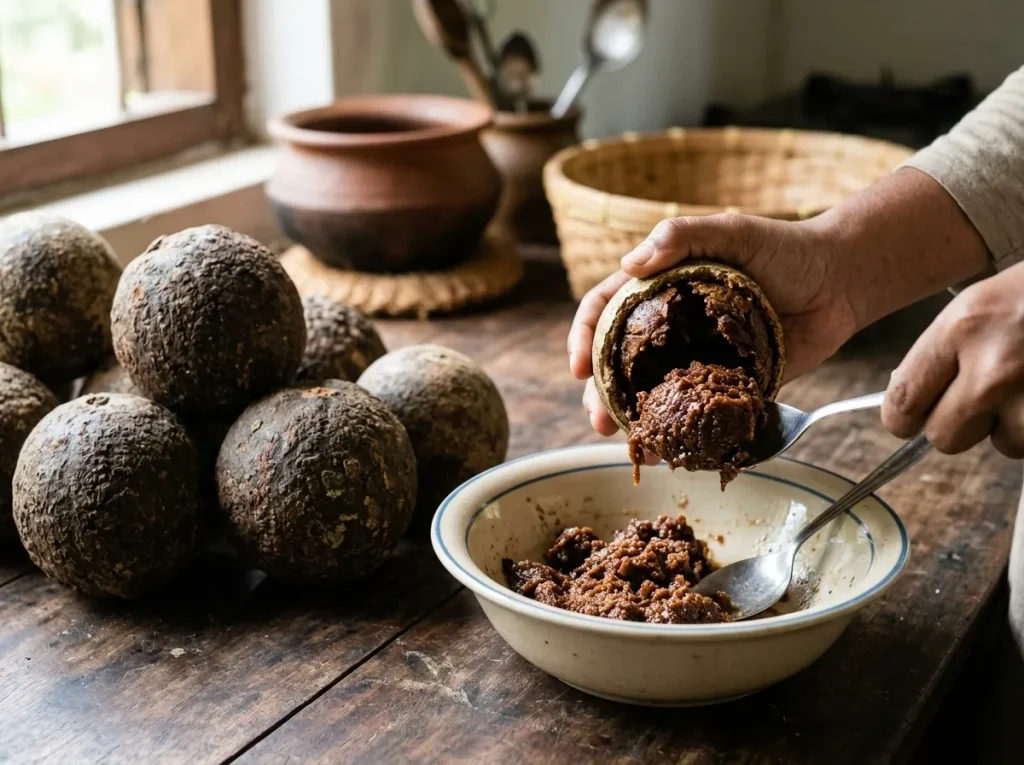
Carefully crack each wood apple’s hard outer shell using a suitable tool. Scoop the soft brown pulp into a large bowl with a spoon.
Inspect the pulp as you work, removing pieces of shell or other unwanted material. Discard fruits that appear spoiled or have an unusual fermented smell.
Step 2: Mix the Pulp with Sugar and Water
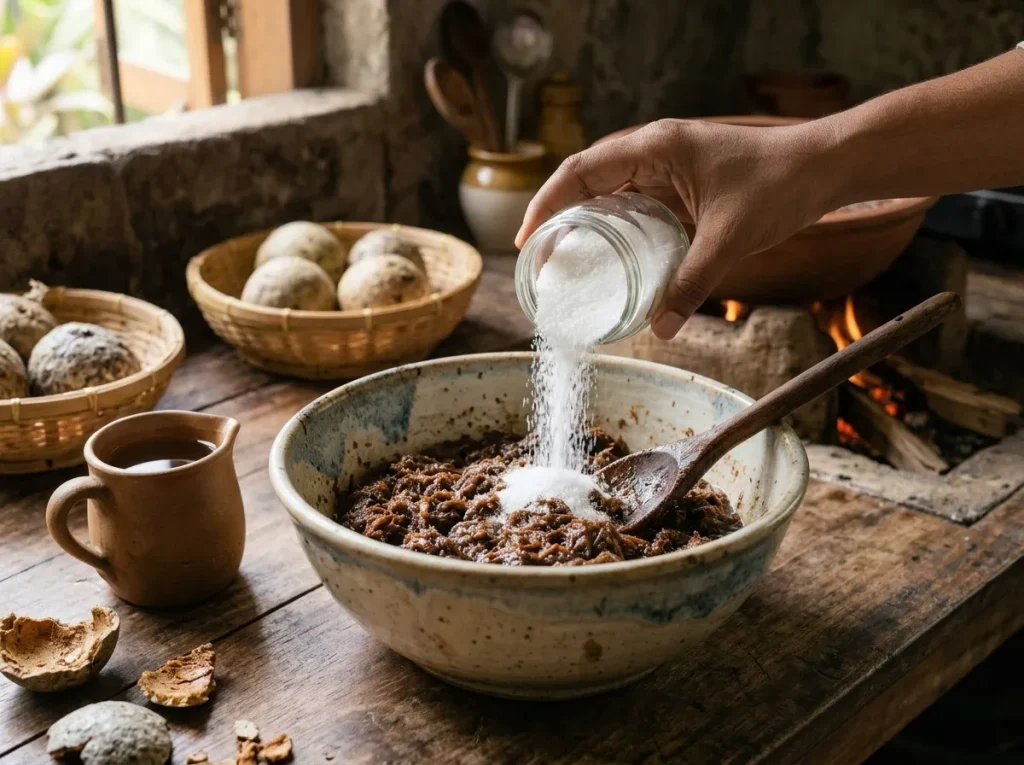
Add the granulated sugar to the collected wood apple pulp. Pour in approximately one cup of water and mix thoroughly.
Mash the mixture with a spoon or clean utensil until the pulp begins to soften and the sugar is distributed throughout. If the pulp remains too firm to mix, add a little more water.
Allow the mixture to stand briefly if necessary to make the pulp easier to strain.
Step 3: Strain Out the Seeds and Fibers
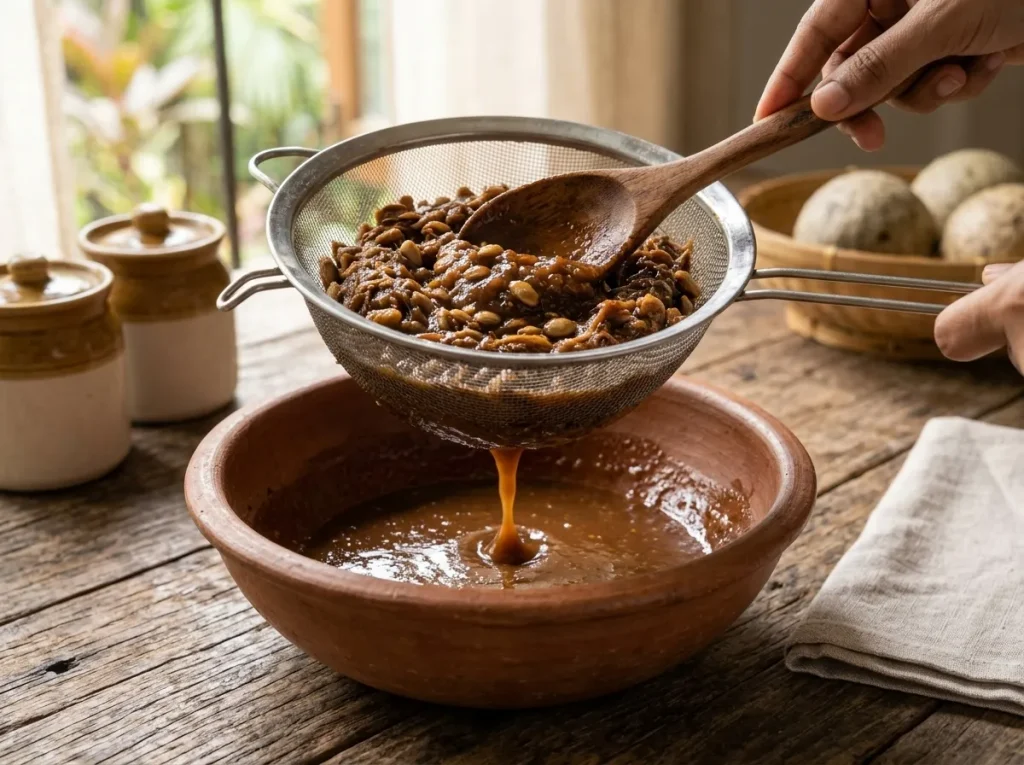
Place a coarse-mesh sieve over a clean bowl. Transfer the pulp mixture into the sieve in manageable batches.
Press the pulp firmly through the mesh with the back of a spoon or a suitable spatula. Continue until you have collected as much smooth pulp as practical.
Discard the remaining hard seeds and tough fibers. This step is important because they can make the finished jam unpleasantly gritty.
Step 4: Begin Cooking the Pulp
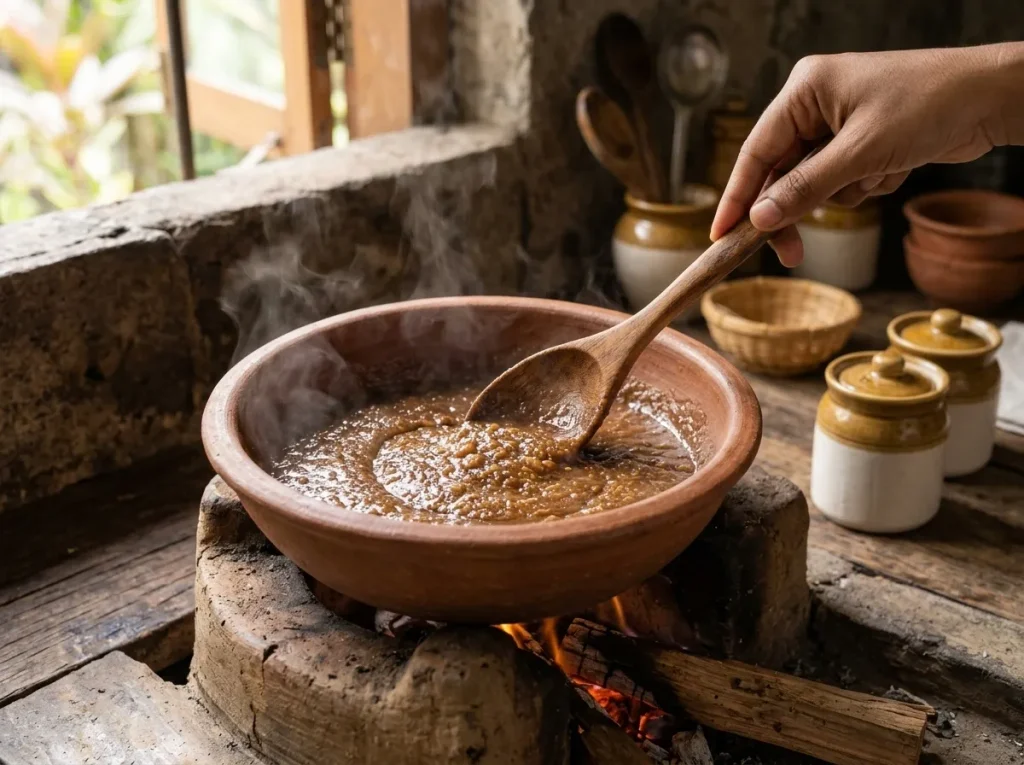
Transfer the strained pulp mixture into a heavy-bottomed saucepan or clay pot.
Place it over medium heat and stir regularly as the mixture warms. Once it begins to simmer, lower the heat as needed to maintain a steady, gentle cook.
Scrape the bottom and sides of the pot frequently to prevent the sugary pulp from sticking or burning.
Step 5: Add the Lime Juice
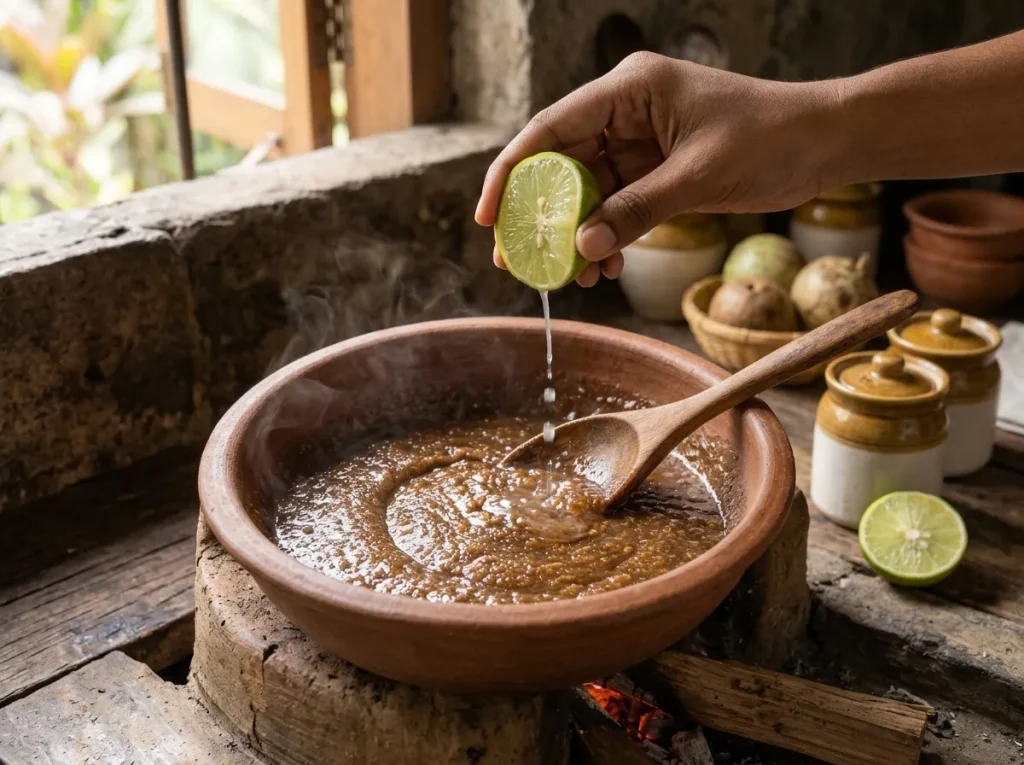
When the mixture is hot and beginning to thicken, add one tablespoon of fresh lime juice and stir thoroughly.
Taste carefully once the mixture has cooled enough to sample. If the fruit is particularly sweet, a little additional lime juice may help balance the flavor.
Avoid adding too much liquid at once, as extra moisture will increase the cooking time.
Step 6: Cook Until Thick and Glossy
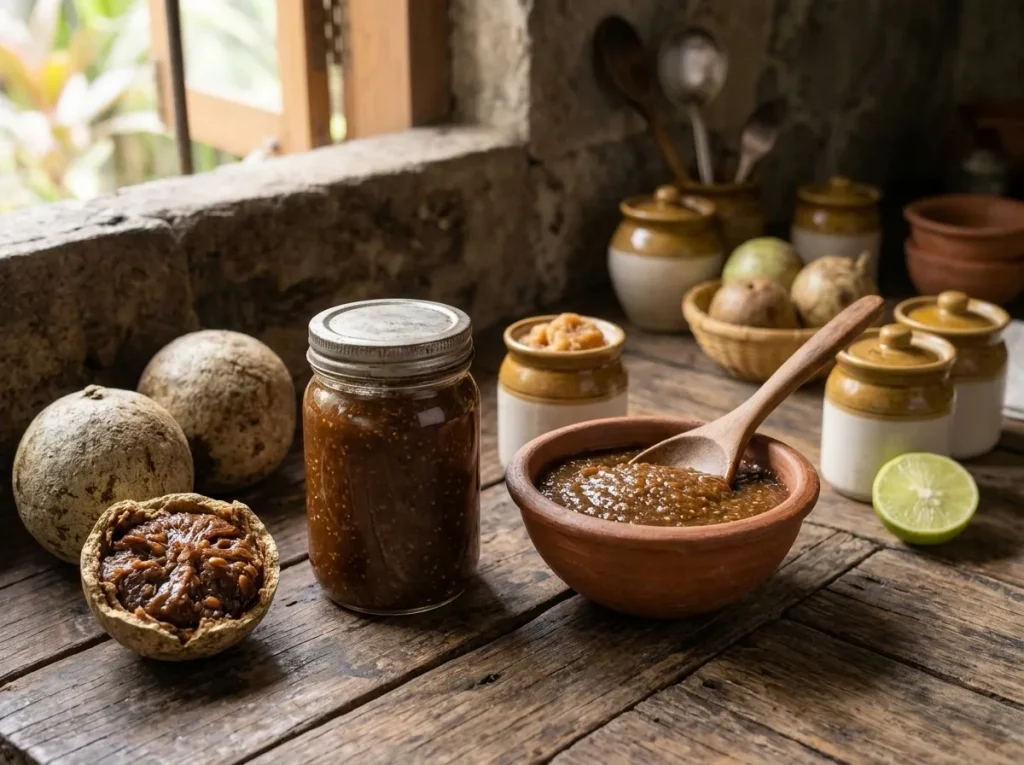
Continue cooking over medium-low heat, stirring frequently. As moisture evaporates, the mixture should gradually darken and become thicker.
The exact cooking time depends on the amount of pulp, the water content of the fruit, the pan used, and the heat level. The suggested 35 minutes is an estimate rather than a guaranteed finishing time.
To check the consistency, place a small spoonful on a chilled plate and let it cool briefly. If it thickens and spreads slowly when the plate is tilted, it may be ready. If it remains runny, continue cooking and test again.
Remember that hot jam is thinner than cooled jam, so avoid cooking it excessively in an attempt to make it completely firm while still hot.
Step 7: Transfer to Clean Jars
Remove the pan from the heat once the jam reaches your preferred consistency.
Transfer the jam into clean, heat-safe glass jars using clean utensils. Follow an appropriate tested procedure for preparing jars, and avoid exposing hot glass to sudden temperature changes.
Close the jars with suitable lids. For an untested homemade recipe, do not assume that sealing hot jam in a jar makes it safe for long-term pantry storage.
Allow the jam to cool safely before refrigerating it.
Tips for the Best Homemade Divul Jam
- Use ripe fruit: Ripe wood apples provide a stronger aroma and a more developed flavor.
- Strain thoroughly: Removing seeds and tough fibers creates a smoother spread.
- Add water gradually: Too much water can make the cooking process unnecessarily long.
- Stir frequently: Wood apple pulp and sugar can stick to the bottom of the pan as the mixture thickens.
- Adjust the flavor carefully: Fruit tartness varies, so taste the mixture during cooking and adjust the lime juice if needed.
- Allow for cooling: The jam will become thicker as it cools, so judge the final consistency accordingly.
- Avoid high heat: A gentle simmer reduces the risk of scorching and helps the mixture cook more evenly.
Common Mistakes to Avoid
Adding Too Much Water
Excess water makes the jam take longer to reduce. Start with the suggested amount and add more only when necessary to loosen the pulp.
Skipping the Straining Step
Wood apple contains seeds and fibrous material. Straining helps create a smoother texture and a more enjoyable spread.
Cooking Without Stirring
The thickening pulp can burn on the bottom of the pan. Stir frequently, particularly during the final stages of cooking.
Expecting an Exact Cooking Time
Fruit size, ripeness, water content, and cookware all affect the cooking process. Use the consistency of the jam rather than the clock alone to judge when it is ready.
Assuming the Jam Is Shelf-Stable
A thick consistency, clean jar, or tight lid does not establish that homemade jam is safe at room temperature. Use refrigeration unless you follow a tested preservation recipe and processing method.
How to Serve Wood Apple Jam
Wood Apple Jam has a distinctive flavor that works well with both traditional Sri Lankan foods and everyday breakfast dishes.
- With toast: Spread a thin layer over buttered toast for a sweet-and-tangy breakfast.
- With Sri Lankan roti: Serve alongside coconut roti or plain roti as a sweet accompaniment.
- With pancakes: Add a spoonful to warm pancakes or waffles.
- With crackers and cheese: Pair a small amount with mild cheese and crackers for a sweet-and-savory snack.
- With plain yogurt: Swirl a little into plain yogurt for extra fruit flavor.
- As a dessert topping: Spoon over simple cakes or other desserts just before serving.
How to Store Homemade Wood Apple Jam
Because this recipe has not been tested for shelf-stable canning, refrigeration is the safer storage choice.
- Refrigeration: Transfer the cooled jam into a clean, covered container and refrigerate promptly.
- After opening: Always use a clean, dry spoon and avoid introducing crumbs, water, or other food into the jar.
- Storage duration: The safe storage period depends on the recipe’s acidity, sugar concentration, preparation, and handling. No specific storage duration can be guaranteed for this untested recipe.
- Freezing: If you want to keep the jam longer, freeze a portion in a suitable freezer-safe container, leaving room for expansion. Thaw it in the refrigerator and use clean utensils.
Discard the jam if you notice mold, bubbling that was not expected, an unusual odor, or other signs of spoilage. Do not taste it to determine whether it is safe.
Frequently Asked Questions
What is Divul Jam?
Divul Jam is the Sri Lankan name for wood apple jam. It is made by combining wood apple pulp with sugar and cooking it until it thickens into a fruit preserve.
Can I make wood apple jam without pectin?
Yes. This recipe does not require commercial pectin. Cooking reduces the moisture and concentrates the mixture, but the final thickness can vary with the fruit and the ingredient ratios.
Why is my wood apple jam too runny?
It may contain too much water or may not have cooked long enough. Return it to the pan and simmer gently, stirring frequently, until it reaches a thicker consistency. Allow it to cool before judging the result.
Why does my jam taste sour?
Wood apples naturally vary in tartness. If the pulp is especially sour, adjust the sugar gradually during cooking. Lime juice is optional for flavor balance and can be reduced if the fruit is already very tart.
Can I use jaggery instead of white sugar?
You can experiment with replacing some of the white sugar with Sri Lankan kithul jaggery. It will give the jam a deeper, caramel-like flavor and darker color. However, changing the sugar affects the recipe’s texture and preservation properties, so refrigerate the finished jam.
Can I store Divul Jam in the pantry?
Do not assume this homemade recipe is safe for pantry storage. Long-term room-temperature storage requires a tested recipe with an appropriate acidity, sugar concentration, jar preparation, and processing procedure.
What can I eat with wood apple jam?
Wood apple jam tastes delicious with toast, roti, pancakes, crackers, and mild cheese. You can also use a small amount as a topping for plain yogurt or simple desserts.
Final Thoughts
This Sri Lankan Wood Apple Jam Recipe transforms the distinctive flavor of ripe Divul into a thick, aromatic fruit preserve using a few everyday ingredients. Straining the pulp, cooking it gently, and stirring regularly are the keys to achieving a smooth texture and a balanced sweet-and-sour taste.
Enjoy your homemade Divul Jam with toast, roti, pancakes, or your favorite snacks. With its unique tropical flavor, this traditional-style preserve is a wonderful way to enjoy wood apple in a different form.
For more homemade recipes and delicious everyday inspiration, explore the recipes here at DishCrave.
Explore More Sri Lankan Recipes
If you enjoyed this homemade Wood Apple Jam, try these other delicious recipes from DishCrave:
- Wood Apple Milk (Divul Kiri) – Enjoy another traditional Sri Lankan recipe made with wood apple.
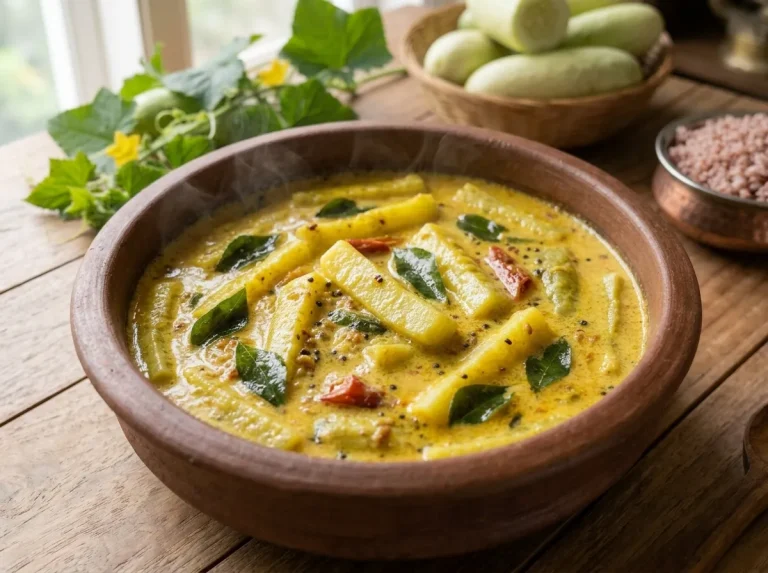
- Sri Lankan Cucumber Curry (Pipignna Kiri Hodi) – Discover a comforting Sri Lankan curry made with cucumber and coconut milk.
- Explore More Breakfast Recipes – Find more delicious breakfast ideas to enjoy at home.