Rich & Aromatic Caramel Halwa Recipe
Introduction
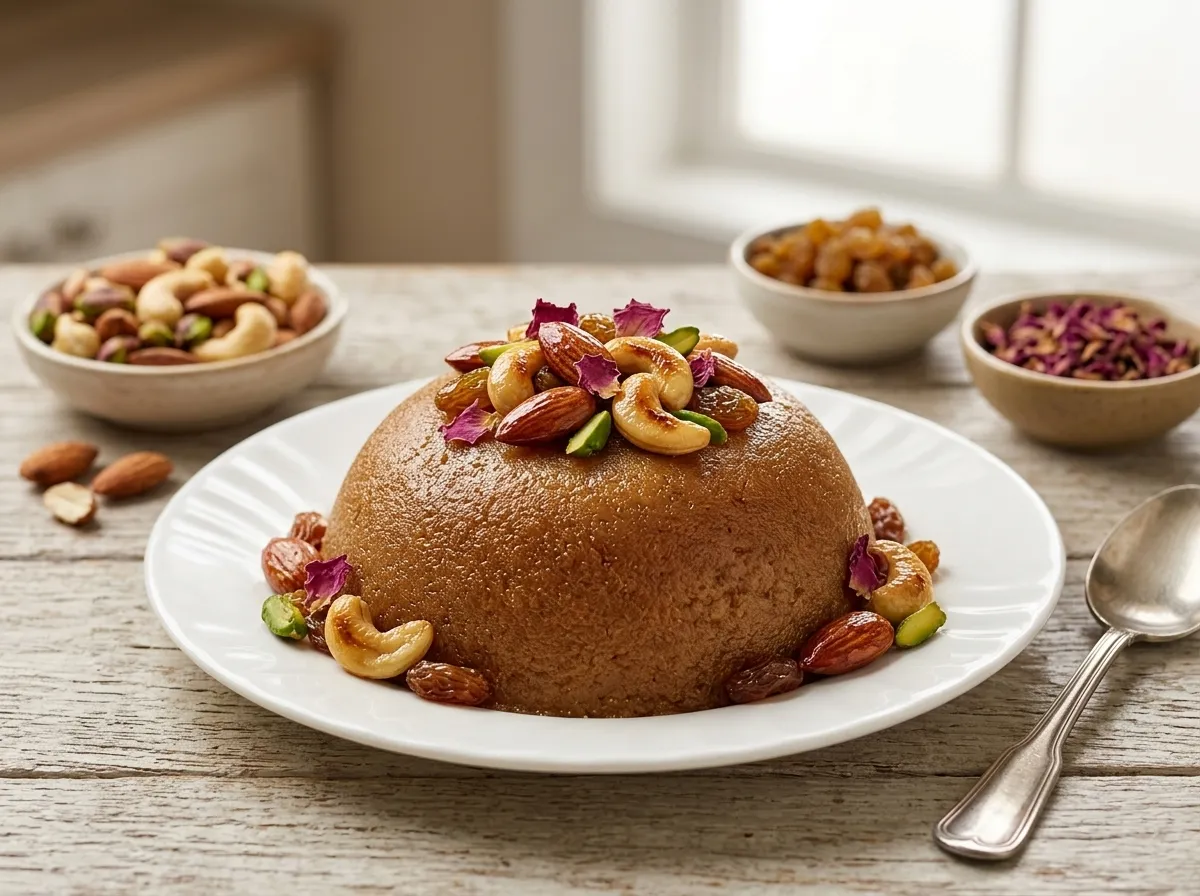
Caramel Halwa is a rich, aromatic dessert made with milk-soaked semolina, golden caramel, fragrant ghee, and warm cardamom. This delicious sweet is filled with roasted almonds, pistachios, cashews, and plump raisins, creating a wonderful combination of flavors and textures in every bite.
This homemade caramel halwa recipe transforms simple pantry ingredients into an elegant dessert that is perfect for festive occasions, family gatherings, and special celebrations. The halwa is cooked until thick and glossy, then shaped into individual domes for an attractive presentation.
If you love traditional semolina desserts with a rich caramel flavor, this easy-to-follow recipe is a wonderful addition to your dessert collection.
Recipe Information
- Preparation Time: 20 minutes
- Cooking Time: 30–40 minutes
- Total Time: Approximately 1 hour
- Servings: 3–4 individual portions
- Difficulty: Intermediate
- Course: Dessert
- Cuisine: South Asian-inspired
- Main Ingredient: Semolina (rava)
Note: Preparation and cooking times are estimates. Ingredient quantities may need adjustment to achieve your preferred texture and sweetness.
Ingredients for Caramel Halwa
For Soaking the Semolina
- 1 cup semolina (rava)
- 1½–2 cups milk, enough to cover the semolina
For the Caramel Halwa Base
- ½–¾ cup ghee (clarified butter), divided
- ½ cup sugar, as a suggested starting quantity for the caramel
- 1–2 teaspoons ground cardamom
For the Nut and Raisin Mixture
- ⅓ cup almonds, whole or slivered
- ⅓ cup pistachios, whole or slivered
- ⅓ cup cashews
- ¼ cup raisins or sultanas
- A small handful of dried rose petals, optional for garnish
Important: The original ingredient quantities were estimated from visual references rather than verified measurements. In particular, the sugar quantity is a suggested starting point, not a confirmed original measurement. Adjust the caramel and ghee quantities as needed for the desired sweetness and consistency.
Make Shopping Easier
Add this recipe's ingredients to your shopping list and keep everything organized.
How to Make Caramel Halwa
Step 1: Soak the Semolina in Milk
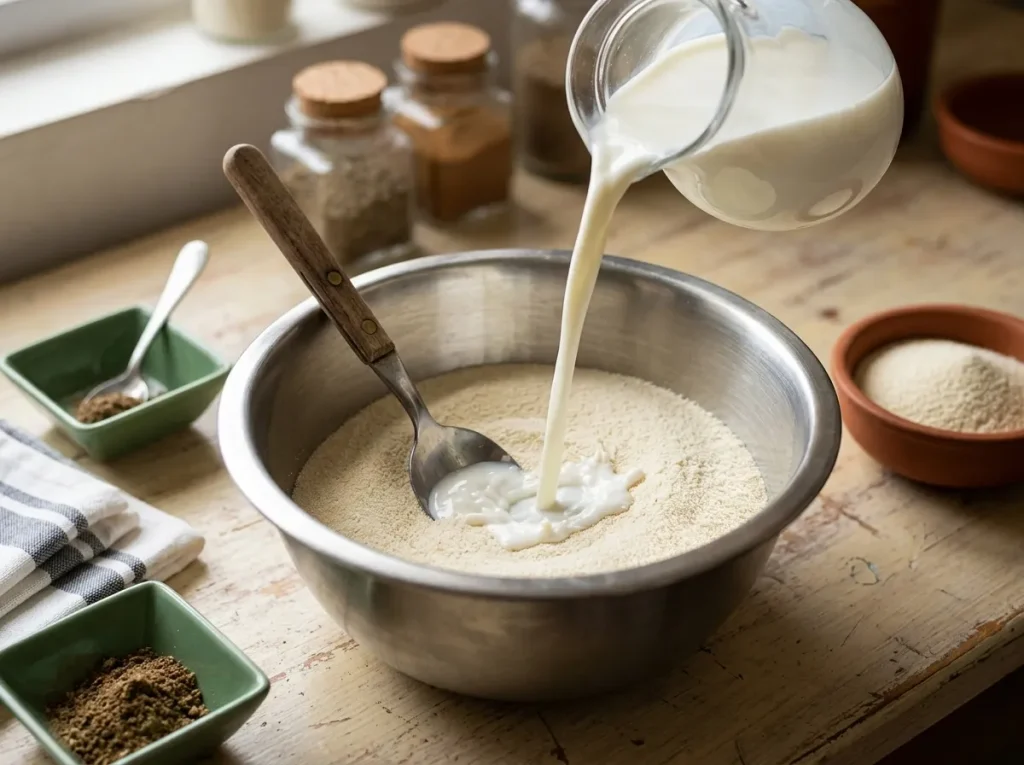
Place the semolina in a medium-sized mixing bowl. Gradually add enough milk to cover the grains, then stir well to combine. Cover the bowl and leave the mixture to soak for approximately 15–20 minutes.
Soaking allows the semolina to absorb the milk and soften, helping create a smoother halwa with a pleasant texture.
Step 2: Roast the Nuts and Raisins
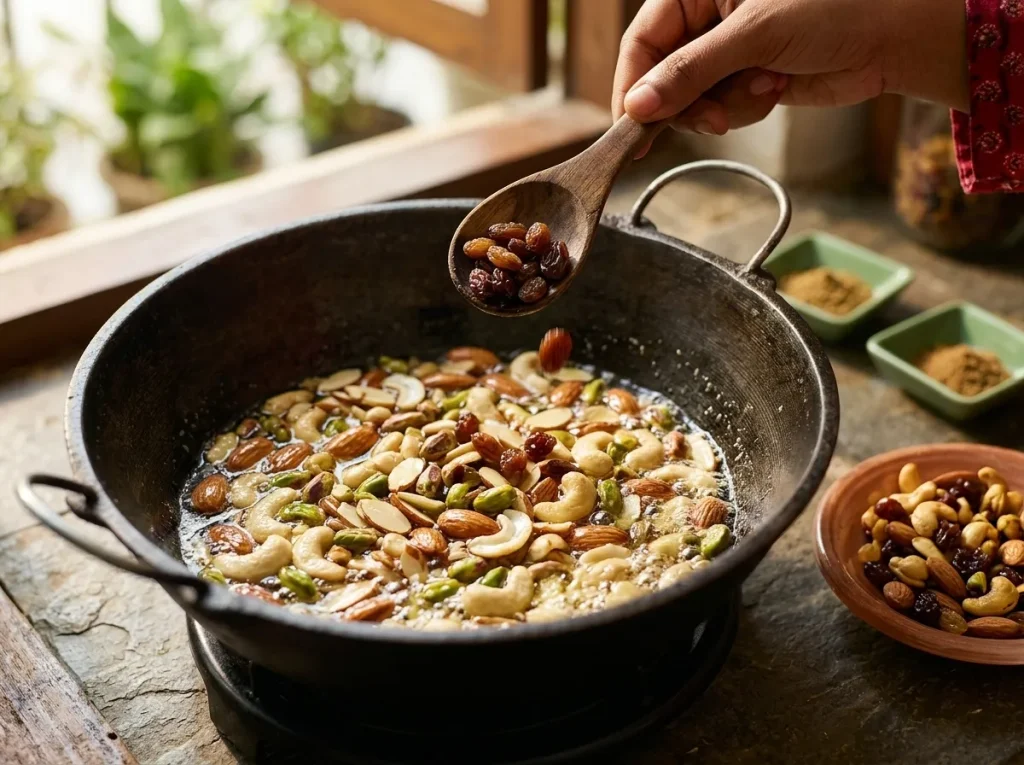
Heat a small portion of the ghee in a pan over medium-low heat. Add the almonds, pistachios, and cashews, stirring frequently until they become lightly golden and fragrant.
Add the raisins and cook briefly until they swell slightly. Remove the nuts and raisins from the pan and set them aside. Reserve a small portion for decorating the finished halwa.
Step 3: Prepare the Ghee and Caramel Base
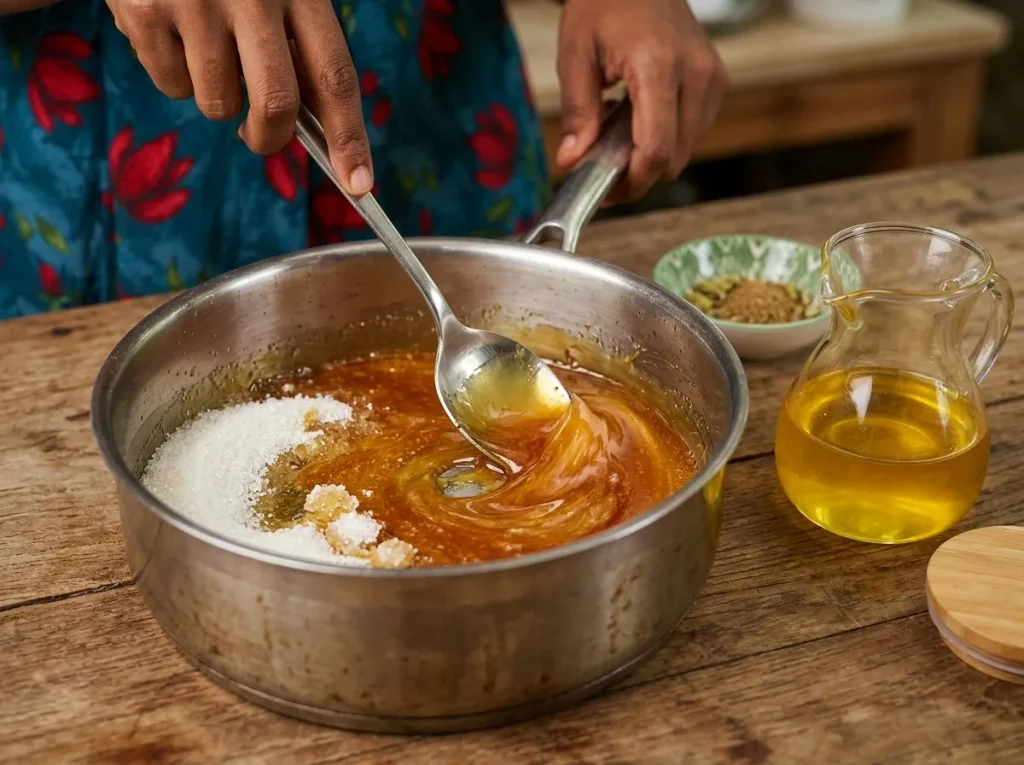
Add the remaining ghee to a large, heavy-bottomed pan or wok and heat gently. In a separate heatproof pan, melt the sugar over low to medium-low heat until it turns a rich amber color, stirring carefully as needed.
Once the sugar has caramelized, carefully incorporate the caramel into the warm ghee, following a controlled method to avoid splashing. Hot caramel can cause severe burns, so handle it with care.
Avoid allowing the caramel to become too dark, as burnt sugar can make the halwa taste bitter.
Step 4: Add the Soaked Semolina
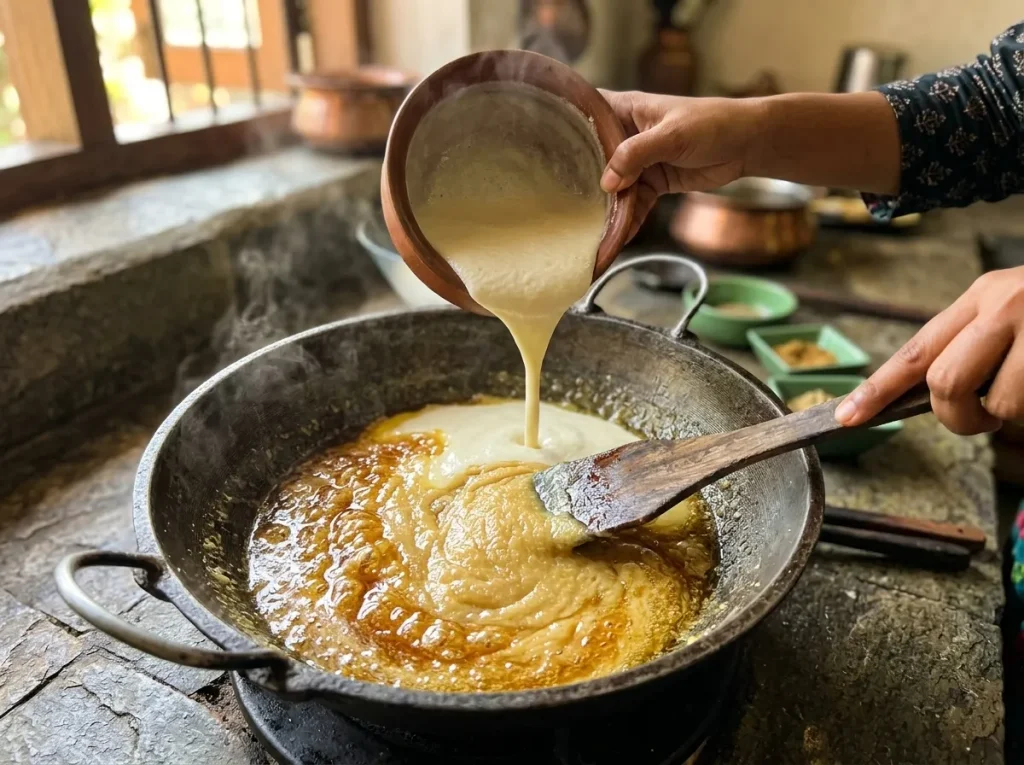
Stir the soaked semolina mixture again to ensure it is evenly combined. Gradually add it to the caramel-ghee mixture while stirring continuously.
Keep the heat at medium-low and stir thoroughly to break up lumps. The mixture may bubble or splutter when the milk comes into contact with the hot caramel, so add it slowly and use a long-handled spoon.
Continue stirring until the semolina begins to thicken and absorb the liquid.
Step 5: Add Cardamom and Cook Until Thick
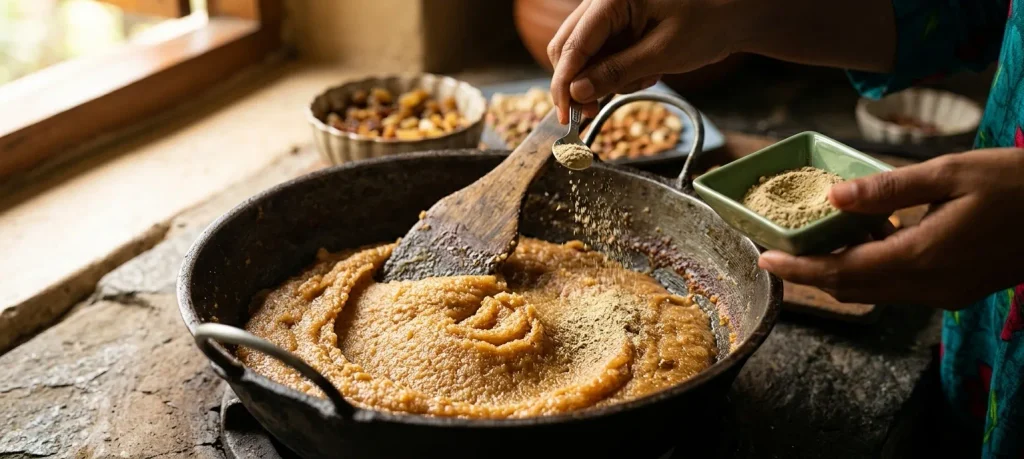
Sprinkle the ground cardamom into the mixture and stir well to distribute its aroma throughout the halwa.
Continue cooking over medium-low heat, stirring frequently to prevent sticking or scorching. As the semolina absorbs the liquid, the halwa will become thicker, darker, and glossier.
Cook until the mixture forms a thick mass and begins to pull away from the sides of the pan. If it becomes too thick before the semolina is tender, add a small amount of warm milk and continue cooking gently.
Step 6: Fold in the Roasted Nuts
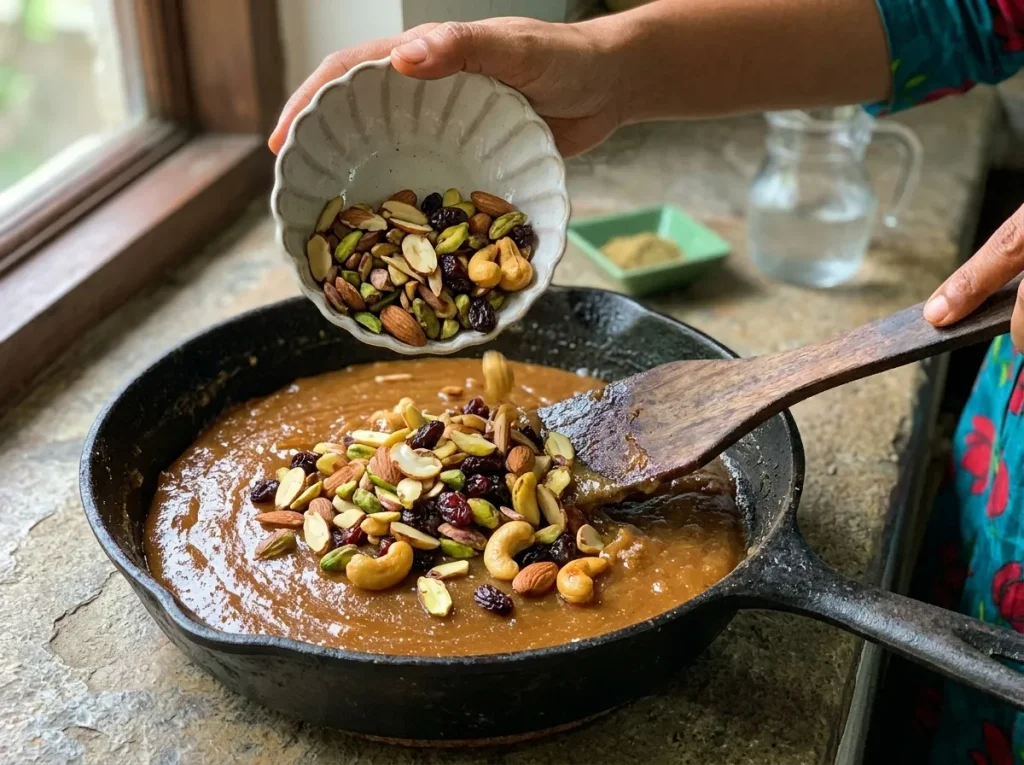
Add most of the roasted almonds, pistachios, cashews, and raisins to the cooked halwa. Mix thoroughly so the nuts and dried fruits are distributed evenly throughout the mixture.
Reserve the remaining nuts and raisins for the final presentation. Taste the halwa carefully and adjust the cardamom or sweetness only if necessary.
Step 7: Mold and Serve the Caramel Halwa
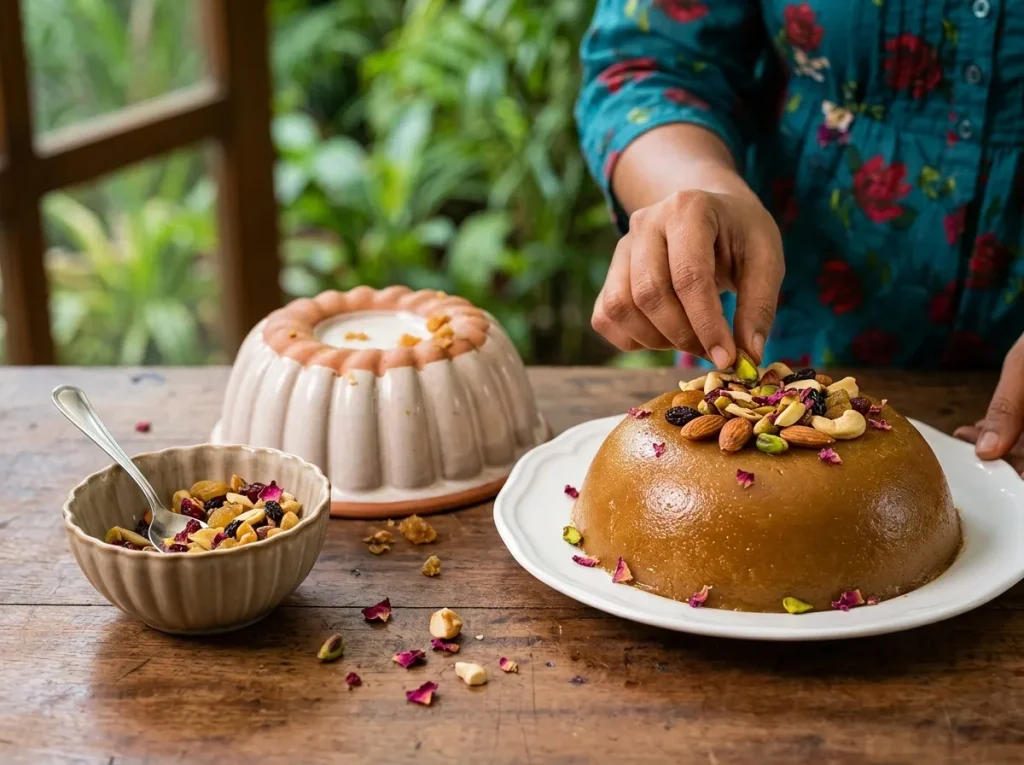
Lightly grease small heatproof bowls or dessert molds with a little ghee. Place some of the reserved roasted nuts and raisins at the bottom of each mold.
Spoon the warm halwa into the molds and press it down gently but firmly to create a compact shape. Allow it to rest briefly so it holds together.
Place a serving plate over each mold and carefully invert it to release the halwa. Garnish with extra pistachios, almonds, or dried rose petals, if desired.
Serve warm for the best aroma and a soft, rich texture.
Tips for Making the Best Caramel Halwa
Soak the Semolina Properly
Allowing the semolina to absorb the milk before cooking helps soften the grains and promotes a more even texture. Stir the mixture before adding it to the caramel base.
Watch the Caramel Carefully
Sugar can burn quickly once it starts turning amber. Use gentle heat and remove it from the heat as soon as it reaches the desired color. Dark, burnt caramel can overpower the delicate flavor of cardamom and ghee.
Stir Continuously
Stirring while adding the semolina and during cooking helps prevent lumps and reduces the risk of scorching on the bottom of the pan.
Adjust the Consistency
The finished halwa should be thick enough to hold its shape but soft enough to enjoy easily. Add a little warm milk if necessary when the mixture becomes too firm before the semolina is fully cooked.
Press the Halwa While Warm
For neat, attractive domes, transfer the mixture to lightly greased molds while it is still warm. Press gently to remove large air pockets without compacting it excessively.
Balance the Nuts and Sweetness
Almonds, pistachios, and cashews provide contrasting textures, while raisins add natural sweetness. Adjust the combination to suit your taste and the ingredients available.
Serving Suggestions
- Festive Dessert Platter: Arrange individual halwa domes on decorative serving plates and garnish with chopped pistachios, almonds, and rose petals.
- After-Meal Treat: Serve a small portion after lunch or dinner for a rich, satisfying dessert.
- Tea-Time Sweet: Enjoy a modest serving alongside plain tea or coffee.
- Special Occasions: Prepare individual molded portions for family celebrations, festive meals, or guests.
Caramel halwa is especially enjoyable when served warm, while the ghee, caramel, and cardamom are still fragrant.
Frequently Asked Questions
What is caramel halwa made of?
Caramel halwa is made using semolina, milk, sugar, ghee, and aromatic spices such as cardamom. Nuts and raisins add flavor and texture.
Why should semolina be soaked in milk?
Soaking softens the semolina before cooking and helps it absorb moisture more evenly. This can improve the texture of the finished halwa.
How do I prevent lumps in caramel halwa?
Add the soaked semolina mixture gradually while stirring continuously. Keep the heat controlled and break up any lumps as soon as they appear.
How do I know when the halwa is ready?
The mixture should be thick, glossy, and cooked through. It should begin pulling away from the sides of the pan and hold its shape when transferred to a mold.
Can I change the nuts used in this recipe?
Yes. You can adjust the combination of almonds, pistachios, and cashews according to your preference. Keep the total amount of nuts reasonably similar to maintain the intended texture.
Can caramel halwa be prepared ahead of time?
Yes. You can prepare it ahead and refrigerate it in an airtight container once it has cooled. Reheat individual portions gently, adding a little milk if needed to soften the texture.
Final Thoughts
This rich and aromatic caramel halwa combines the comforting texture of semolina with buttery ghee, deep caramel flavor, fragrant cardamom, and crunchy roasted nuts. Its elegant molded presentation makes it a beautiful dessert for celebrations or a special homemade treat.
Try this caramel halwa recipe, adjust the sweetness to your liking, and finish each serving with a generous sprinkle of nuts for an impressive dessert.
Explore More Recipes
Looking for more delicious homemade recipes to try? Explore these tasty ideas from DishCrave:
- June Plum and Ceylon Olive Drink – Discover a refreshing Sri Lankan-inspired fruit drink made with June plums and Ceylon olives.
- Spicy & Tangy Mix Fruits Pickle Recipe – Try a flavorful fruit pickle that combines tangy fruits with a spicy kick.
- Explore More Recipes – Browse our complete collection of homemade recipes for more inspiration.