Bay Leaf Liqueur (Allorino)
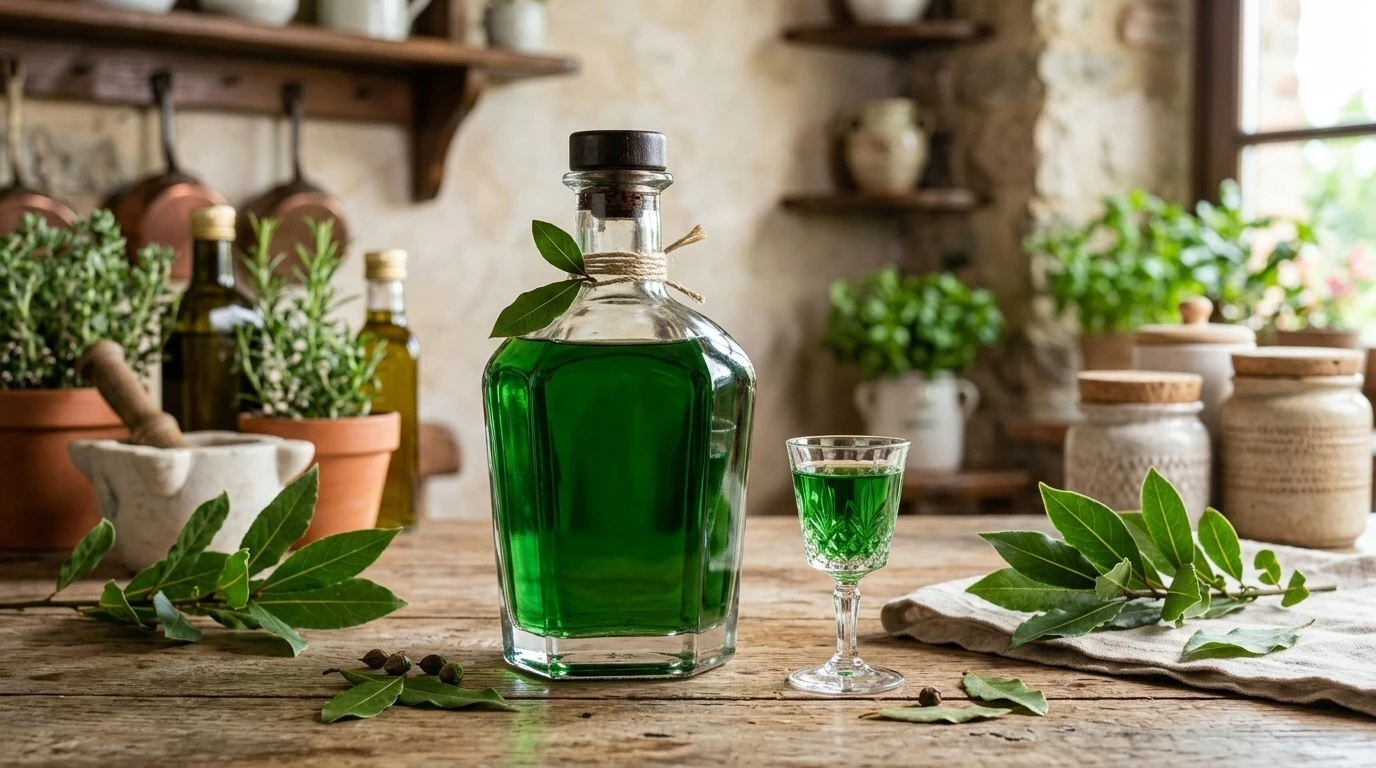
Bay Leaf Liqueur, also known as Allorino, is a fragrant Italian homemade liqueur made by infusing fresh bay leaves in alcohol and blending the infusion with a simple sugar syrup.
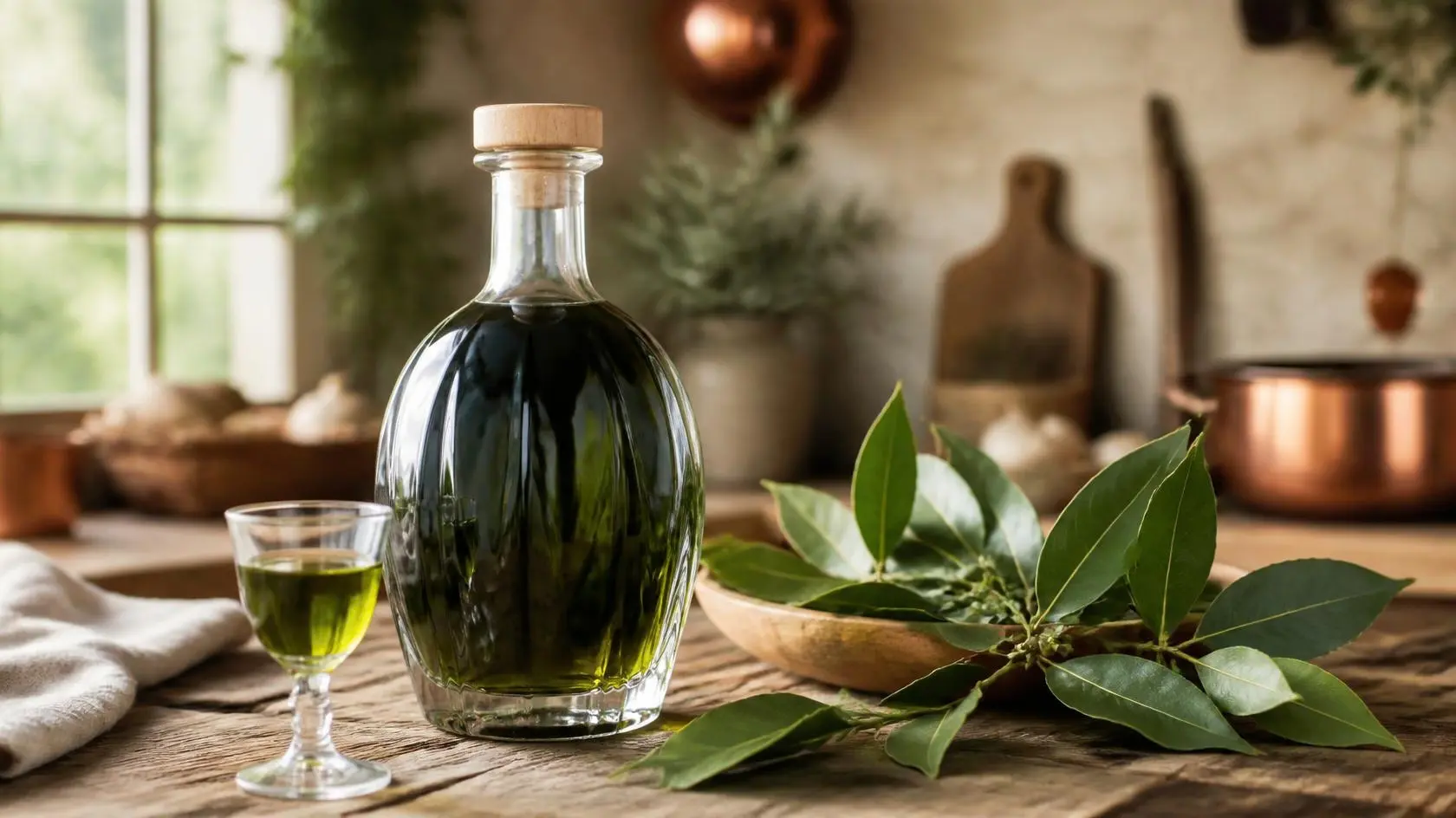
With its beautiful deep green color and intense herbal aroma, this homemade digestive is traditionally served chilled after a meal. If you have a bay laurel plant or hedge in your garden, this is a wonderful way to make use of its fresh, aromatic leaves.
The recipe is simple, but it requires patience: the bay leaves need time to infuse, and the finished liqueur benefits from several weeks of resting before serving.
Bay Leaf Liqueur at a Glance
- Preparation Time: 2 weeks
- Resting Time: 3–4 weeks
- Total Time: About 6 weeks
- Yield: Approximately 1 liter
- Course: Liqueur, Digestif
- Cuisine: Italian
- Diet: Vegetarian
- Season: Year-round
- Difficulty: Easy
Ingredients
- 500 ml 95% alcohol suitable for homemade liqueurs
- 600 ml water
- 400 g granulated sugar
- 25 fresh bay leaves
How to Make Bay Leaf Liqueur
1. Prepare the Bay Leaves
Wash the fresh bay leaves thoroughly under cool running water. Dry them completely with a clean kitchen towel.
It is important that the leaves are completely dry before beginning the infusion.
2. Infuse the Bay Leaves
Place the bay leaves in a clean glass jar and pour in the 95% alcohol.
Close the jar tightly and keep it in a cool, dark place away from direct sunlight. Let the bay leaves infuse for 2 weeks, gently shaking or stirring the jar occasionally.
The alcohol will gradually take on the bay leaves’ distinctive green color and aromatic flavor.
3. Make the Sugar Syrup
After the two-week infusion period, prepare the syrup.
Add the water and sugar to a saucepan and heat until the mixture comes to a boil. Stir until the sugar has completely dissolved.
Remove the saucepan from the heat and allow the syrup to cool completely.
4. Combine the Infusion and Syrup
Once the sugar syrup is completely cold, strain the infused alcohol through a fine filter or clean cheesecloth to remove the bay leaves and any small particles.
Slowly combine the filtered bay leaf infusion with the cooled sugar syrup and mix well.
5. Bottle and Rest
Pour the finished liqueur into clean glass bottles and seal tightly.
Bay leaf liqueur is particularly sensitive to light, so store the bottles in a dark place. You can also wrap the bottles with aluminum foil to protect the liqueur from light.
Allow the liqueur to rest for 3–4 weeks before serving. This resting period allows the flavors to mellow and blend together.
How to Serve Bay Leaf Liqueur
Bay leaf liqueur is traditionally enjoyed as a digestif after a meal.
For the best experience, chill the bottle before serving and pour a small amount into a liqueur glass. It can be served straight or over ice, depending on your preference.
Tips for Making Bay Leaf Liqueur
- Use fresh, aromatic bay leaves: Fresh leaves provide the characteristic herbal aroma and green color.
- Keep the infusion away from light: Direct sunlight can affect the appearance of the liqueur.
- Filter carefully: Straining the infused alcohol thoroughly helps remove small leaf particles.
- Cool the syrup completely: Never combine hot syrup with the alcohol infusion.
- Be patient: The finished liqueur develops a smoother flavor after several weeks of resting.
Variations
Adjust the Alcohol Strength
The final strength can be adjusted by changing the proportions of water and sugar syrup added to the infused alcohol. More dilution produces a lighter liqueur, while less dilution results in a stronger drink.
Make It More Aromatic
For a stronger bay leaf flavor, you can adjust the number of leaves or slightly extend the initial infusion period. Avoid excessively long infusion times, as the flavor can become too intense.
Adjust the Sweetness
If you prefer a sweeter liqueur, increase the amount of sugar in the syrup. For a less sweet version, reduce the sugar while maintaining enough syrup to balance the strong herbal alcohol infusion.
Why Does Bay Leaf Liqueur Become Cloudy or Develop Residue?
Bay leaf liqueur can sometimes develop small residues or changes in appearance when exposed to light. This does not necessarily mean the flavor has been affected.
Keeping the finished liqueur in dark glass bottles or protecting clear bottles from light can help preserve its appearance.
Frequently Asked Questions
What is bay leaf liqueur?
Bay leaf liqueur, or Allorino, is a homemade Italian-style digestif made by infusing fresh bay leaves in alcohol and then combining the infusion with sugar syrup.
How long should bay leaves infuse in alcohol?
For this recipe, the bay leaves are infused for approximately 2 weeks in alcohol.
How long should bay leaf liqueur rest before drinking?
After combining the infused alcohol and cooled sugar syrup, allow the liqueur to rest for approximately 3–4 weeks before serving.
Should bay leaf liqueur be stored in the dark?
Yes. Bay leaf liqueur is sensitive to light, so storing it in a dark place or protecting the bottle from direct light is recommended.
Can I make bay leaf liqueur less sweet?
Yes. You can adjust the amount of sugar used to make the syrup according to your preferred sweetness.
Storage
Store the sealed bottles in a cool, dark place, away from direct sunlight. For the best flavor and appearance, keep the liqueur protected from light during storage.
Important Safety Note
This recipe uses 95% alcohol, which is extremely strong. Use only food-grade alcohol specifically intended for making liqueurs and follow the manufacturer’s instructions and applicable local laws. Never use industrial or denatured alcohol.
Final Thoughts
Bay leaf liqueur is a surprisingly simple homemade digestif that transforms fresh bay leaves into an intensely aromatic drink. The preparation itself takes only a short amount of hands-on work, while the infusion and resting periods provide the time needed for the flavors to develop.
If you have fresh bay leaves available, this traditional Allorino recipe is an interesting way to turn them into a homemade after-dinner liqueur.
You May Also Like
Wheat Germ Oil for Skin and Hair: Benefits and How to Use It